
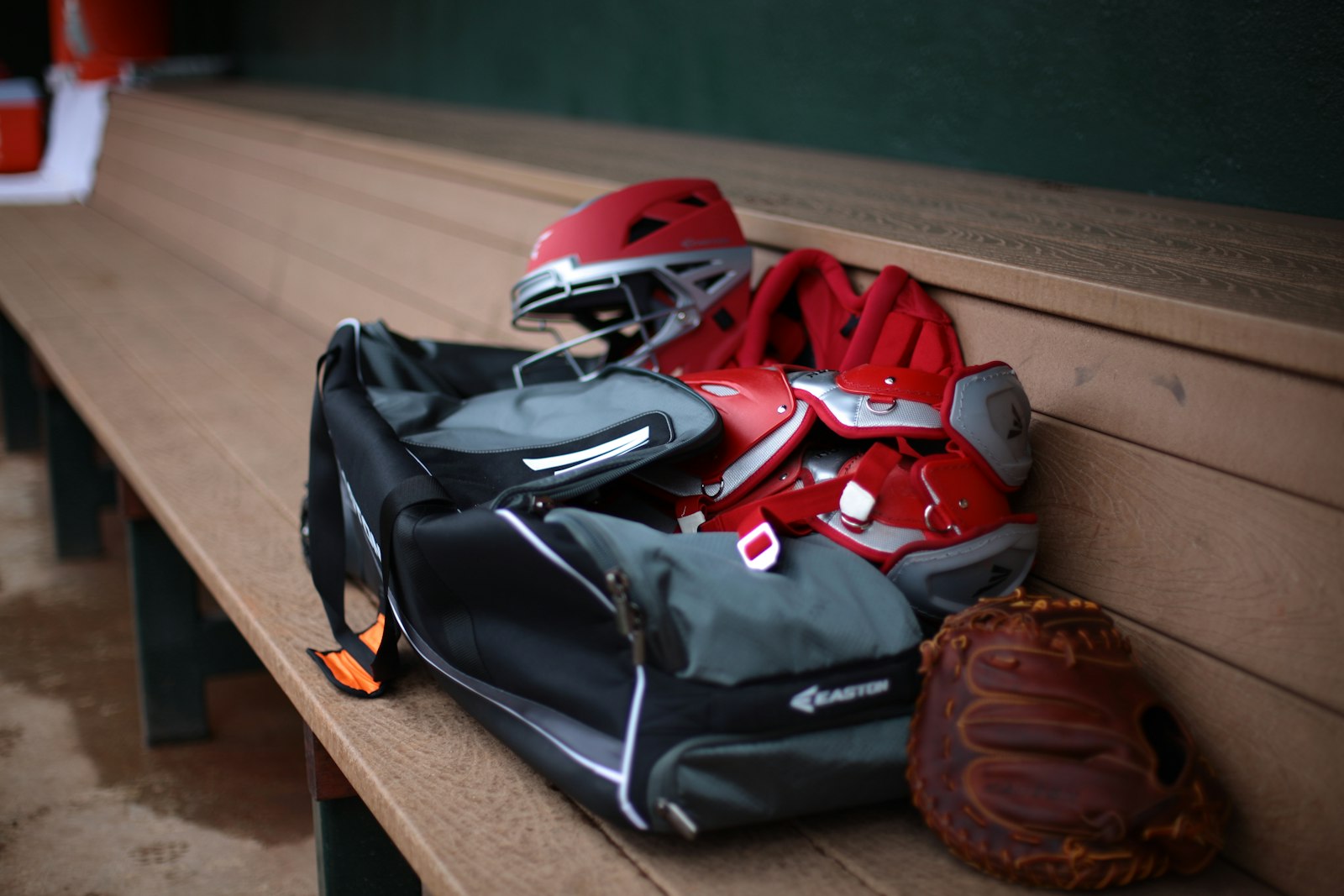
Catcher is the hardest position in baseball to play and the hardest to fill. Programs at every level — youth, high school, college — are perpetually short of good ones.
For a player willing to do it, that scarcity is an enormous opportunity. Here is what the position actually demands and how to develop it without wearing a young body out.
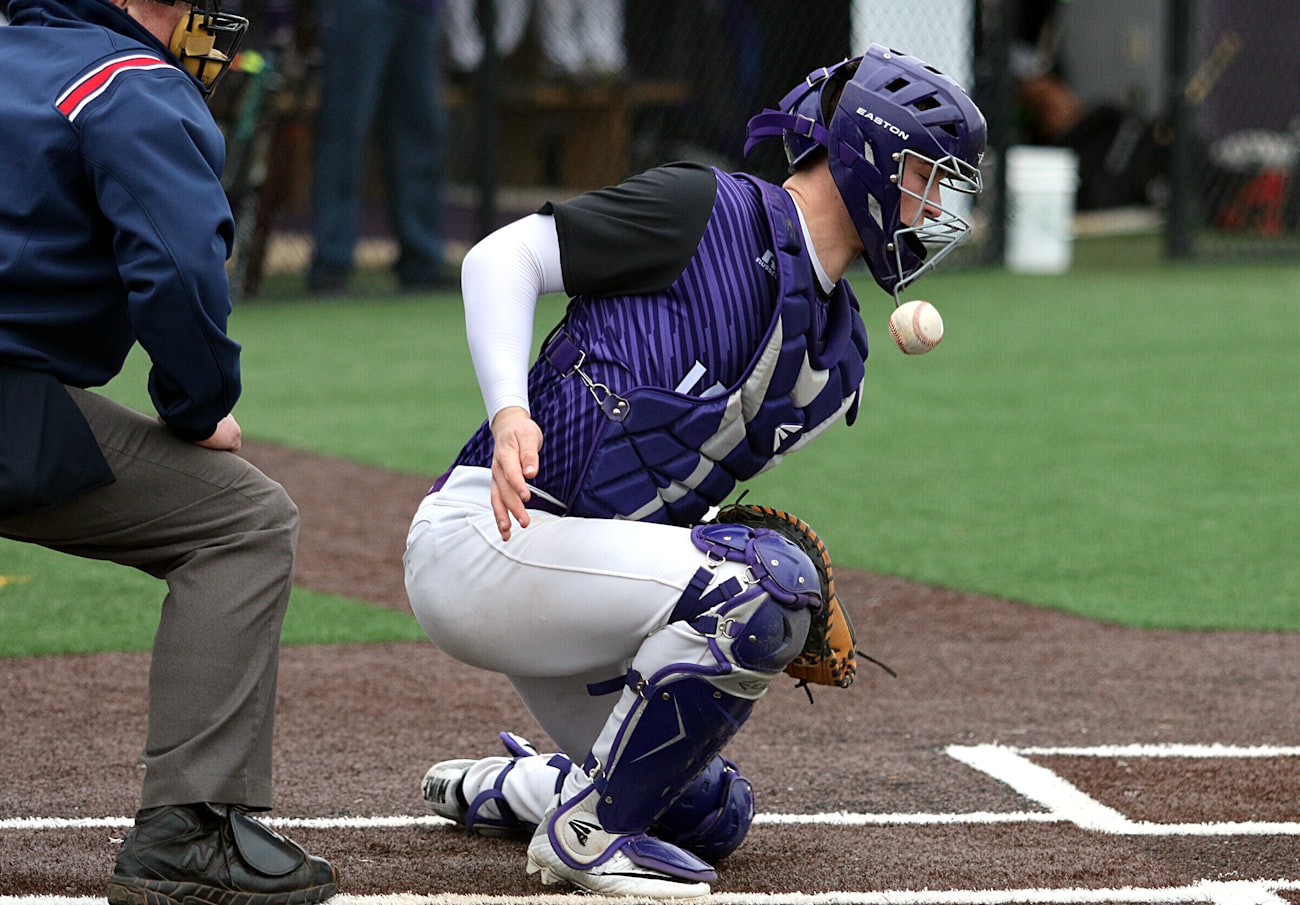
Why Catchers Are Scarce
The supply-demand imbalance is the most extreme in the sport, for straightforward reasons.
| The demand | The deterrent |
|---|---|
| Every team needs at least two | It is physically punishing |
| The position is hard to learn | Gear is hot, especially in Florida |
| Good ones change a game | Foul tips genuinely hurt |
| College programs recruit them heavily | Many players move off it in their mid-teens |
The result is that a competent catcher gets opportunities a comparable infielder does not. It is one of the clearest levers a young player has in college recruiting, and part of why catcher sits in the premium tier in our guide to baseball positions.
The Four Core Skills
| Skill | What it is | Youth benchmark |
|---|---|---|
| Receiving / framing | Catching borderline pitches so they look like strikes | Quiet glove, no yanking |
| Blocking | Keeping pitches in the dirt in front of you | Knees down, chest square, ball stays close |
| Throwing | Controlling the running game | Pop time 2.2-2.5 sec |
| Game management | Calling pitches, positioning fielders, leading | Develops from 12-13 onward |
Receiving and Framing
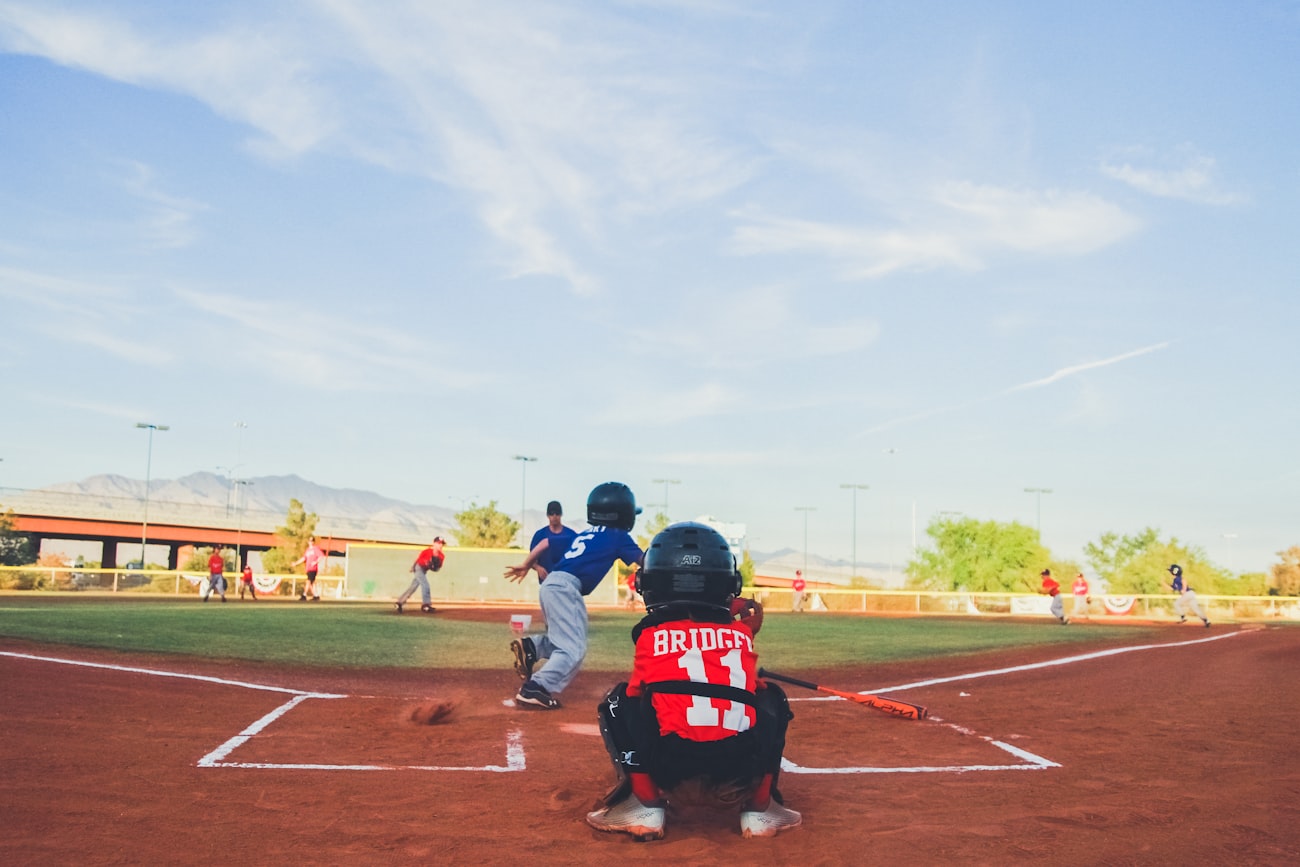
Framing is the most undervalued skill in youth baseball and among the most valuable in professional baseball, where it is measured precisely.
The principle is simple: catch the outer half of the ball, keep the glove quiet, and stick the pitch rather than yanking it back toward the zone. Umpires respond to a still glove; sudden movement makes a strike look like a ball.
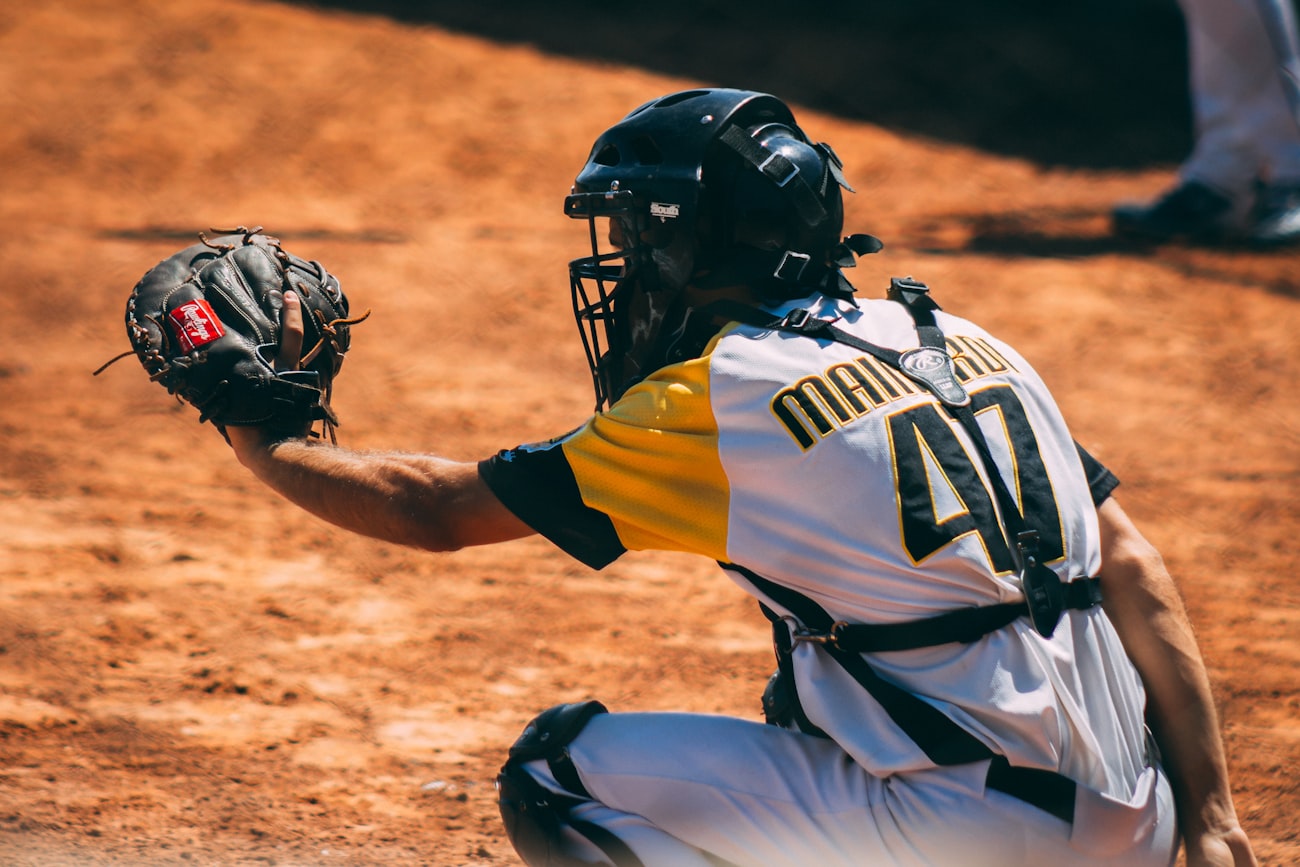
Many catchers now receive with one knee down. It improves the presentation of low pitches, creates a better throwing angle on the glove side, and — importantly for a growing player — reduces stress on the knees and lower back compared with a full squat all game.
Blocking
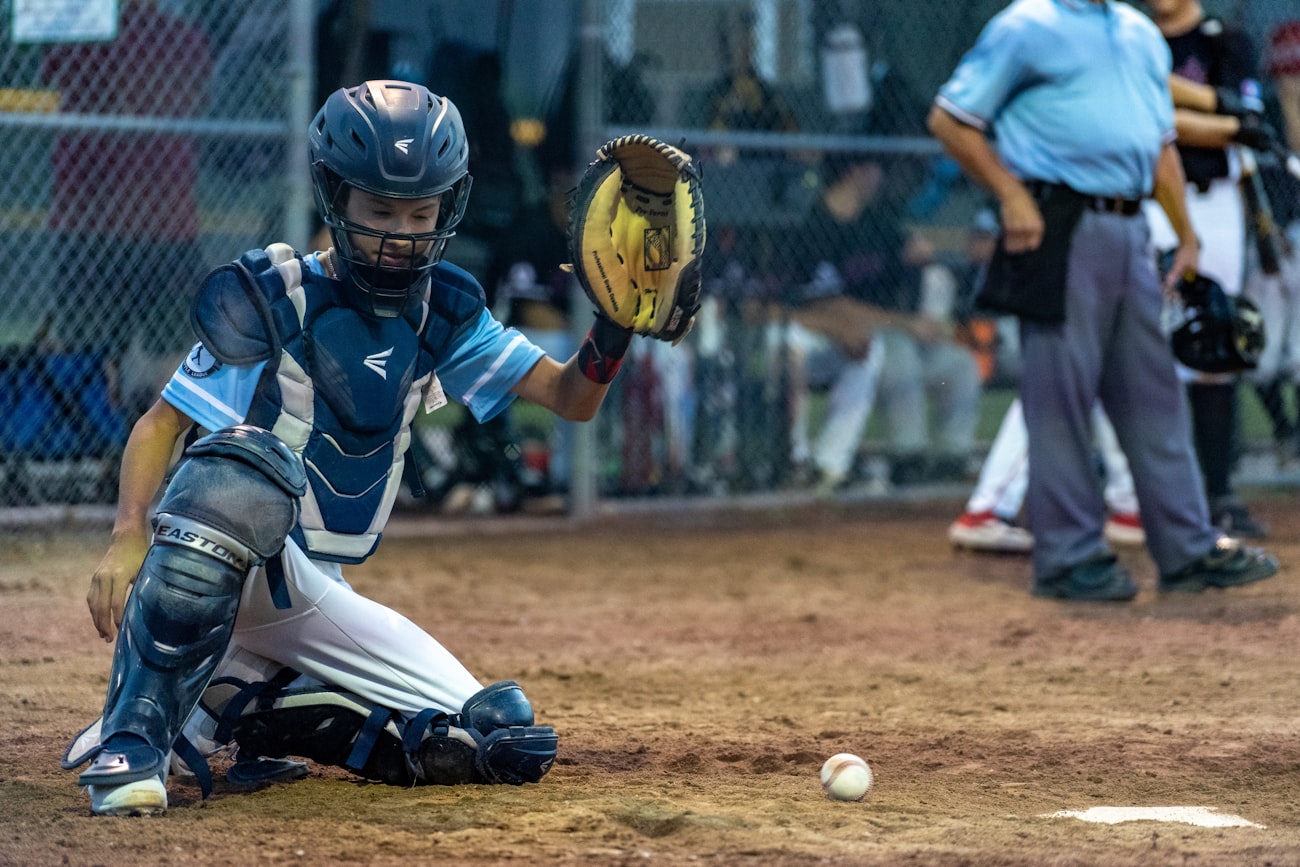
- Recognise the pitch early — read it out of the hand, not off the bounce.
- Drop the knees straight down; do not fall forward.
- Keep the chest square to the pitcher and angle it downward.
- Chin down, glove filling the gap between the knees.
- Clear the feet back and to the side, toes pointed away.
The goal is not to catch it. The goal is to keep it in front, close enough to recover. Young catchers who try to glove everything in the dirt let more balls through than those who simply get their body in the way.
Blocking is also the skill that earns a pitcher’s trust fastest. A pitcher who believes his catcher will keep a breaking ball in front will throw it with two strikes — which changes what that pitcher can do.
Pop Time and Throwing
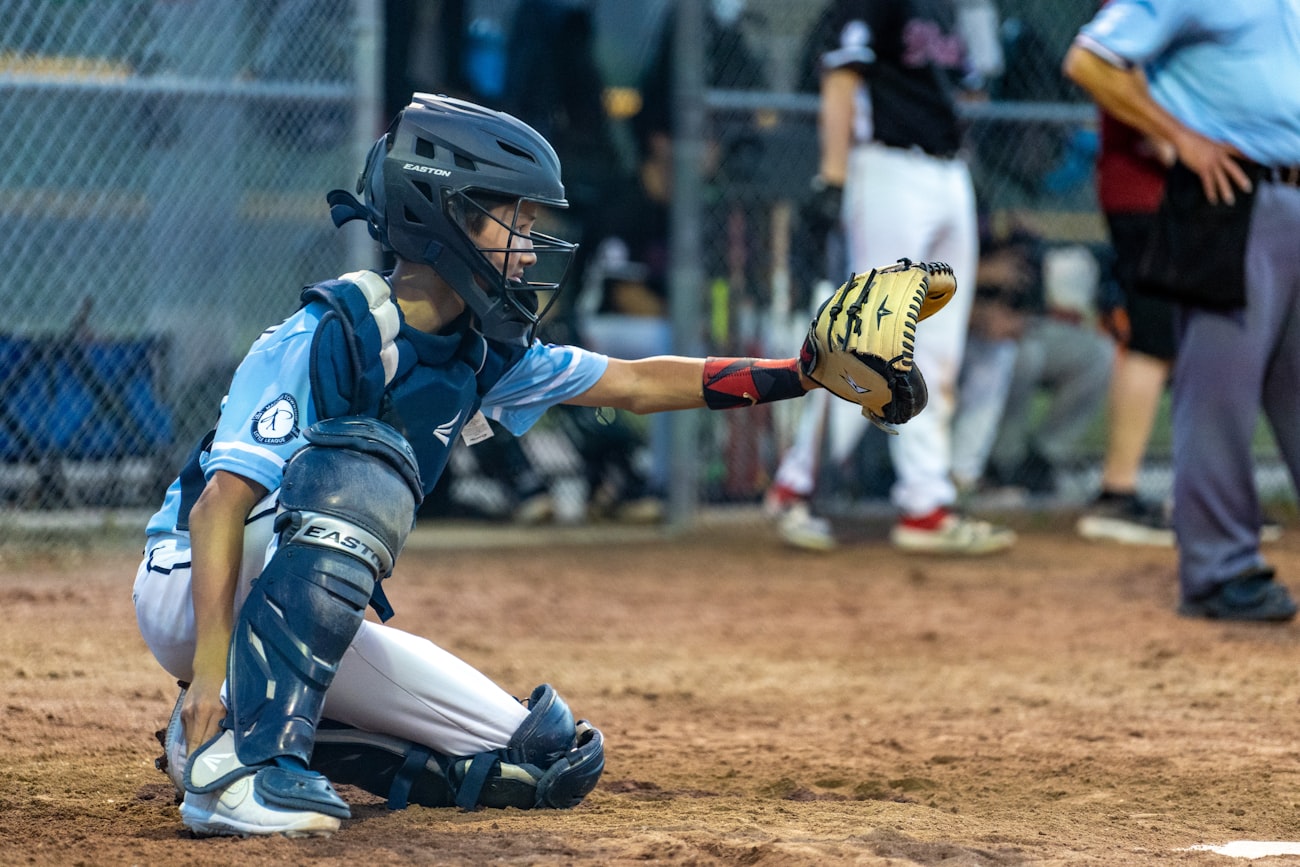
Pop time is measured from the ball hitting the mitt to it arriving at the fielder’s glove at second base.
| Pop time | Level |
|---|---|
| Under 1.9 sec | Elite — college and professional |
| 1.9 – 2.05 | Strong high school prospect |
| 2.05 – 2.2 | Good high school |
| 2.2 – 2.5 | Solid youth range |
| Over 2.6 | Development needed |
Arm strength is only one of three inputs, and usually not the limiting one. Transfer speed and footwork typically account for more, and both are trainable without adding arm stress.
The most common youth error is waiting until the ball is caught before starting to move. Good catchers are already in a coiled, ready position and begin their footwork as the pitch approaches.
Managing the Workload
This is where families most need to be attentive, because catching load is largely invisible.
A catcher receives well over a hundred pitches a game, throws back on every one, and squats through all of it. Across a tournament weekend that accumulates fast — and none of it appears on any pitch count.
| Risk | Management |
|---|---|
| Cumulative throwing volume | Count catching throws alongside pitching |
| Catching and pitching same weekend | Avoid where possible; never back to back |
| Knee and hip stress | One-knee receiving; lower-body strength work |
| Heat in full gear | Extra breaks and fluids — see our heat guide |
| Multiple games per day | Rotate catchers; do not catch every inning |
Our arm care guide covers cumulative throwing load, and our heat safety guide covers why catchers are the highest-risk players on a hot Florida tournament day. Resources from the National Athletic Trainers’ Association are worth reviewing on overuse in young athletes generally.
Gear
Catching is the one position with genuinely non-optional equipment, and fit matters for safety rather than comfort alone.
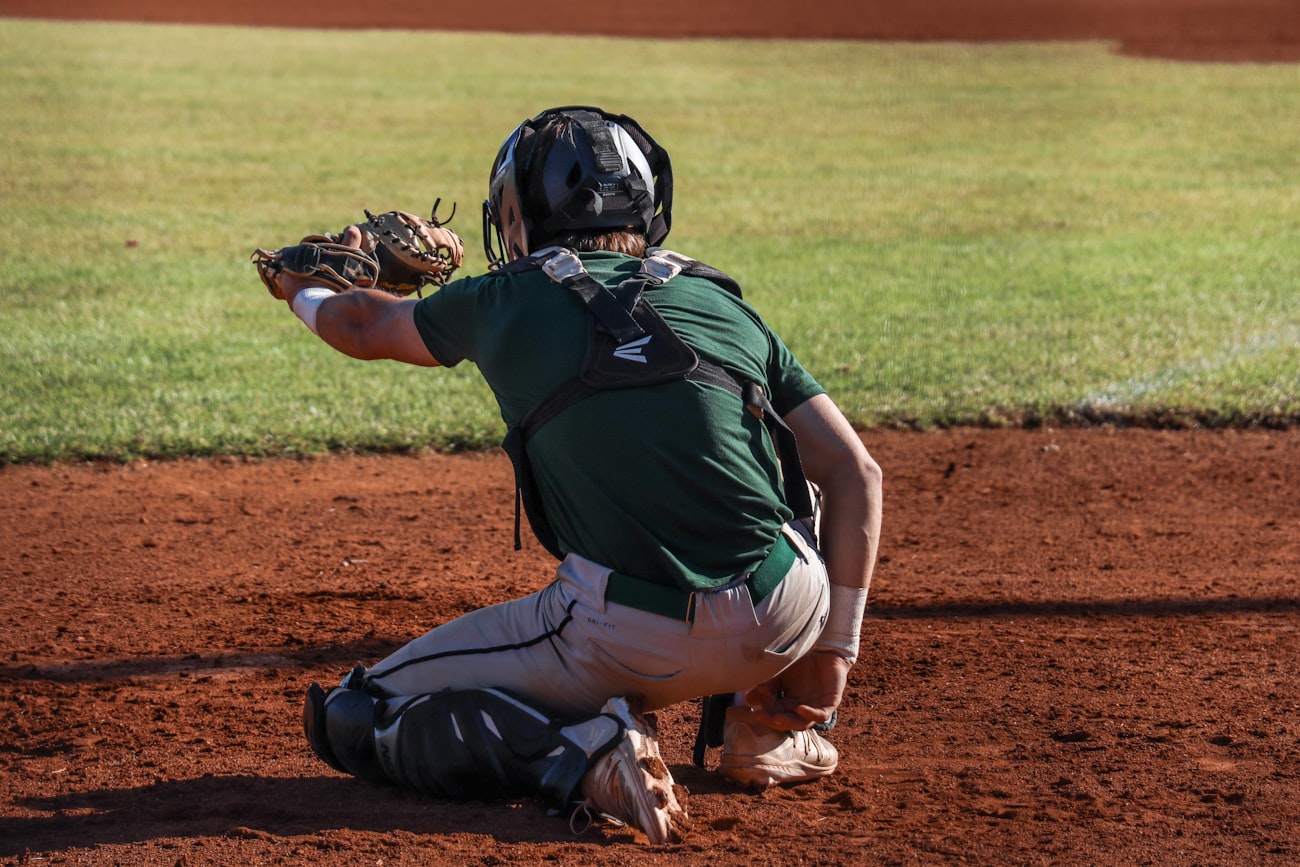
- Helmet and mask — must fit properly; replace after significant impact.
- Chest protector — sized to cover from collarbone to waist.
- Leg guards — should cover the knee fully without restricting the squat.
- Catcher’s mitt — a mitt, not a fielding glove. See our glove buying guide for sizing.
- Athletic cup — genuinely non-negotiable.
- Knee savers — optional; some catchers find them helpful.
Gear is a real cost, and one families do not always anticipate — our cost breakdown includes it.
Should Your Player Catch?
If they have any interest, the answer is usually yes — at least to try it.
It suits players who are tough, vocal, engaged in every pitch and comfortable being the centre of the defence. It suits players who like responsibility. It does not suit everyone, and that is fine.
What is certain is that a player who can genuinely catch will always find a roster spot. Our coaching staff develops catchers at every age group — come to a tryout and let them take a look.
Frequently Asked Questions
What is a good pop time for a youth catcher?
At youth level, 2.2 to 2.5 seconds is solid. Elite high school catchers get under 2.0. Pop time is measured from the ball hitting the mitt to it reaching the fielder’s glove at second base.
How do you improve a catcher’s pop time?
Three things: a faster glove-to-hand transfer, more efficient footwork, and arm strength. The biggest youth error is waiting until the ball is caught to start the throwing motion — good catchers are already moving as the pitch arrives.
Is catching bad for a young player’s knees?
Catching places real cumulative stress on knees, hips and lower back. It is manageable with good mechanics — including one-knee-down receiving, which reduces load — plus sensible workload limits and strength work.
Should a catcher also pitch?
It is common but should be managed carefully. Catching is high-volume throwing, and combining it with pitching in the same weekend creates significant cumulative arm load that neither coach may be tracking.
What age should a player start catching?
Many start around 9 or 10 with basic receiving and blocking. Throwing mechanics and pop time work typically begin around 11 to 13, and game-calling develops from there.
Catchers Wanted
WAR Baseball is always developing catchers across 13U through 17U. If your player is willing to put the gear on, come see us.