
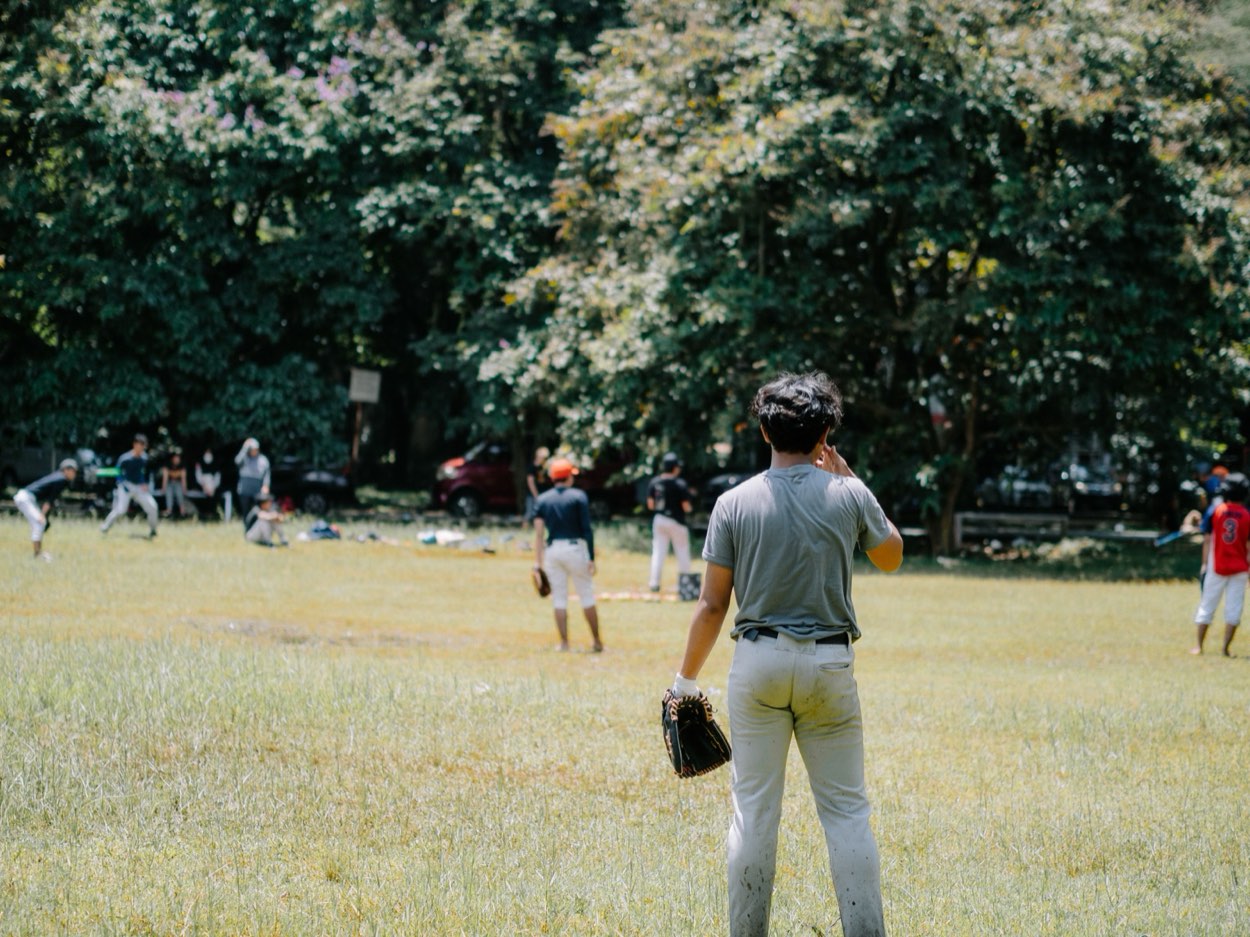
The players who improve fastest are rarely the ones with the best coaching. They are the ones doing something on the four days a week when there is no practice.
Almost every fundamental in baseball can be trained alone, in a driveway or a backyard, with equipment most families already own.
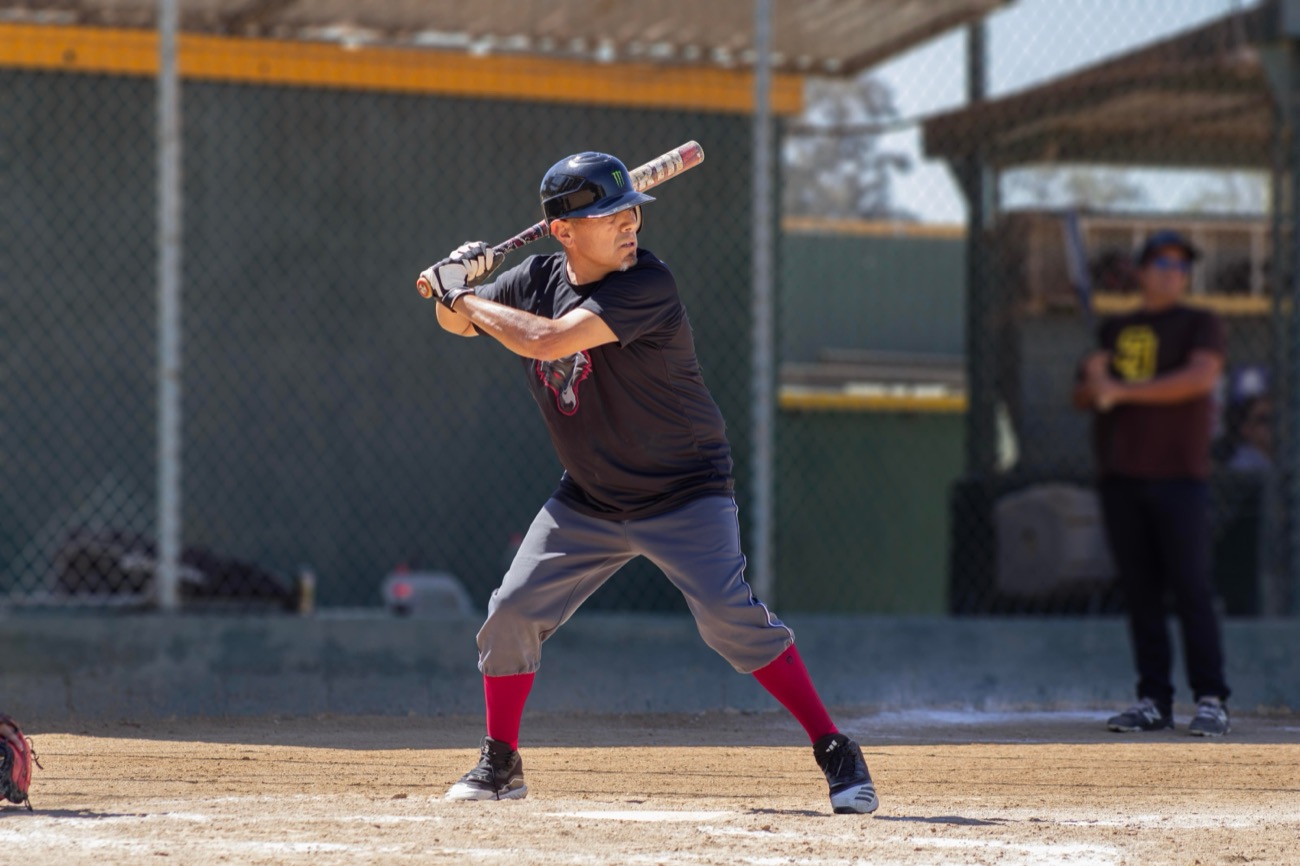
Wall Ball: The Highest-Value Drill
If a player did only one thing alone, this would be it.
Stand 10 to 15 feet from a flat wall and throw a ball against it, fielding the rebound. It produces an enormous volume of controlled repetitions in a small space and trains hands, footwork and reactions simultaneously.
| Variation | What it builds |
|---|---|
| Two-handed field and return | Fundamental ground ball mechanics |
| Backhand only | Glove-side range |
| Forehand only | Arm-side range |
| Bare hand (tennis ball) | Soft hands, quick transfer |
| Field and quick transfer | Exit footwork and release speed |
| Short hops from closer in | Reactions and hands under pressure |
Use a tennis ball or rubber ball indoors and against anything you would rather not damage. The skill transfers regardless of the ball — the footwork fundamentals are the same.
Twenty minutes of wall ball a day will make a young infielder unrecognisable in a season. It is the closest thing to a shortcut we know of.
WAR Baseball coaching staff
Hitting Alone
| Drill | Equipment | Focus |
|---|---|---|
| Dry swings | Bat only | Mechanics, sequencing, no outcome distraction |
| Tee work | Tee and net | Contact point, bat path, consistency |
| One-hand drills | Short bat, tee | Isolating top and bottom hand |
| Mirror work | Mirror | Positions and posture |
| Bunting into a net | Bat, balls, net | Grip, angle, using the legs |
| Weighted or heavy bat swings | Heavier bat | Strength — low volume, good form only |
Dry swings are underrated because they feel unserious. With no ball, a player can focus entirely on the movement — and mechanical change happens faster without an outcome to chase, which complements the power work in our bat speed guide.
Throwing and Accuracy
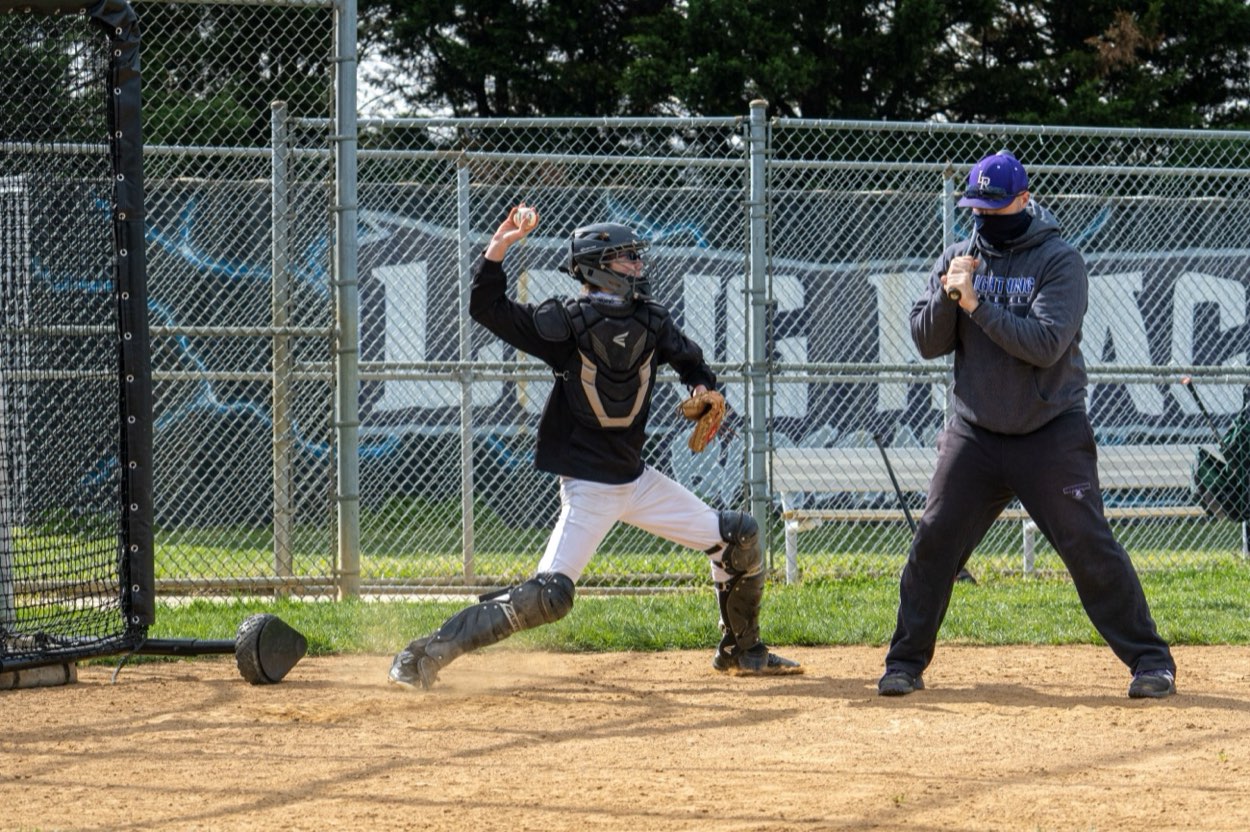
Throwing alone requires only a target and a bit of space.
- Set a target — a bucket, a taped square on a wall, a hanging net.
- Work from a realistic distance for the player’s age and position.
- Count strikes against misses; keep a record so progress is visible.
- Practise the footwork before each throw, not just the throw.
- Include crow hops so the whole sequence gets trained, not just the arm.
Keep total throwing volume in mind. Solo throwing is real throwing, and it counts toward the week’s load — as our arm care guide and two-way player guide both stress.
Footwork and Speed
| Drill | Space needed | Builds |
|---|---|---|
| Agility ladder | 10 feet | Foot speed, coordination |
| Cone shuffles | 15 feet | Lateral movement, change of direction |
| Sprint starts | 20-30 yards | Acceleration — the 60’s biggest component |
| Base-running turns | A corner of a yard | Rounding technique |
| Drop step reps | 10 feet | Outfield first step |
Sprint starts are the highest-return item there. Most young players have never been taught how to start, and it is where the largest 60-yard-dash gains sit — see our speed training guide.
A Realistic Weekly Routine
| Day | 20-30 minutes |
|---|---|
| Monday | Wall ball plus dry swings |
| Tuesday | Team practice — nothing extra needed |
| Wednesday | Tee work plus target throwing |
| Thursday | Team practice |
| Friday | Light footwork; rest the arm before the weekend |
| Saturday / Sunday | Games |
| Rest day | At least one genuinely free day per week |
Twenty to thirty minutes most days beats two hours on a Sunday. Skill is built through frequency, and short sessions are far more likely to actually happen.
Note the rest day and the light Friday. Solo work is training, and a player who adds it on top of a full team schedule with no easy days is simply accumulating fatigue.
Making It Stick
The obstacle is almost never equipment. It is consistency, and a few structural things help.
- Keep the gear accessible. A bag by the door gets used; a bag in the garage does not.
- Attach it to an existing habit — before dinner, after homework.
- Make it measurable. Count reps or strikes; progress is motivating.
- Keep it short enough to repeat. Twenty minutes, most days.
- Let the player own it. Parent-enforced practice stops the moment the parent stops enforcing it.
That last point is the one that determines whether any of this lasts. Guidance from player development bodies such as Team USA consistently emphasises intrinsic motivation over supervised volume for young athletes.
What Solo Work Cannot Do
It is worth being clear about the limits so expectations stay realistic.
| Solo practice builds | Only team play builds |
|---|---|
| Mechanics and repetition volume | Timing against live pitching |
| Hands, footwork, accuracy | Situational decision-making |
| Strength and speed | Communication and priority calls |
| Confidence in a skill | Competing under pressure |
| Consistency | Reading the ball off a real bat |
Timing in particular cannot be trained alone. A hitter with a perfect tee swing still has to learn to time live pitching, which is why solo work supplements practice rather than replacing it.
Where It Actually Matters
Solo practice matters most in the off-season and during school-heavy stretches, when team sessions thin out and it is easy to lose ground.
It also matters for players whose families cannot afford frequent private lessons. A player with a wall, a tee and twenty minutes a day can close most of the gap on a player paying $80 a week — which is worth knowing alongside our guide to choosing an instructor and our funding guide.
The players our coaches notice improving fastest between seasons are almost always the ones doing something on their own. It is the least glamorous advantage in the sport and one of the most reliable.
Frequently Asked Questions
What baseball drills can you do alone?
Wall ball for fielding, tee work and dry swings for hitting, target throwing for accuracy, ladder and sprint work for footwork, and bunting into a net. Most of the fundamentals can be trained without a partner.
How much should a player practise on their own?
Twenty to thirty minutes most days is more valuable than a long session once a week. Consistency matters far more than duration at youth level.
What is wall ball and why is it useful?
Throwing a ball against a flat wall and fielding the rebound. It produces a very high volume of controlled repetitions in a small space, and it trains hands, footwork and reactions at once.
Can you practise hitting without a pitcher?
Yes. Tee work, dry swings and soft toss into a net cover most of what a hitter needs mechanically. Live pitching adds timing, which is why both matter — but the mechanical work is the part that can be done alone.
Is solo practice as good as team practice?
It is different rather than lesser. Solo work builds mechanics and volume; team practice builds timing, situations and competition. Players who do both develop faster than those who rely on scheduled practice alone.
Bring That Work to a Tryout
WAR Baseball coaches notice players who work on their own. See upcoming tryouts for 13U through 17U in Tallahassee.