
At youth level almost everyone is a two-way player. The best arm on a 13U team pitches, plays shortstop, and hits in the middle of the order.
That is generally fine and often good for development. The risk is not the dual role itself — it is that nobody adds up the total.

The Counting Problem
Pitch counts are recorded. Almost nothing else is.
| Throwing | Counted? | Load on the arm |
|---|---|---|
| Game pitches | Yes | High |
| Warm-up and bullpen throws | No | High |
| Catching an entire game | No | Very high |
| Infield throws across the diamond | No | Moderate, cumulative |
| Outfield throws with crow hops | No | Moderate to high |
| Pre-game infield / outfield | No | Moderate |
| Private lesson bullpen | No | High |
A player who throws 70 pitches Saturday and then plays shortstop for three games has done far more throwing than the scorebook shows. Our arm care guide covers the limits; this is about the arithmetic behind them.
The Combinations to Watch
| Combination | Risk | Guidance |
|---|---|---|
| Pitcher + catcher | Highest | Avoid in the same weekend where possible |
| Pitcher + shortstop / third base | High | Long throws; manage the day after an outing |
| Pitcher + outfield | Moderate | Fewer throws, but crow hops are high effort |
| Pitcher + first base | Low | Common and sensible pairing |
| Pitcher + designated hitter | Lowest | Keeps the bat in the lineup with no throwing |
| Catcher + any heavy throwing role | High | Catching is already high volume |
Pitcher and catcher is the combination worth being firm about. Both roles are high-volume throwing, and the catcher’s total is invisible — a point our catching guide makes as well.
First base and DH exist for a reason. A pitcher who needs to stay in the lineup on a rest day has options that cost the arm nothing.
How we handle it
Structuring the Week
| Day | Two-way player |
|---|---|
| Pitching day | Pitch; avoid a throwing position afterwards |
| Day +1 | No throwing position; DH or first base if playing |
| Day +2 | Light throwing position — first base or outfield |
| Day +3 | Normal position play |
| Day +4 | Normal; light bullpen if next outing is approaching |
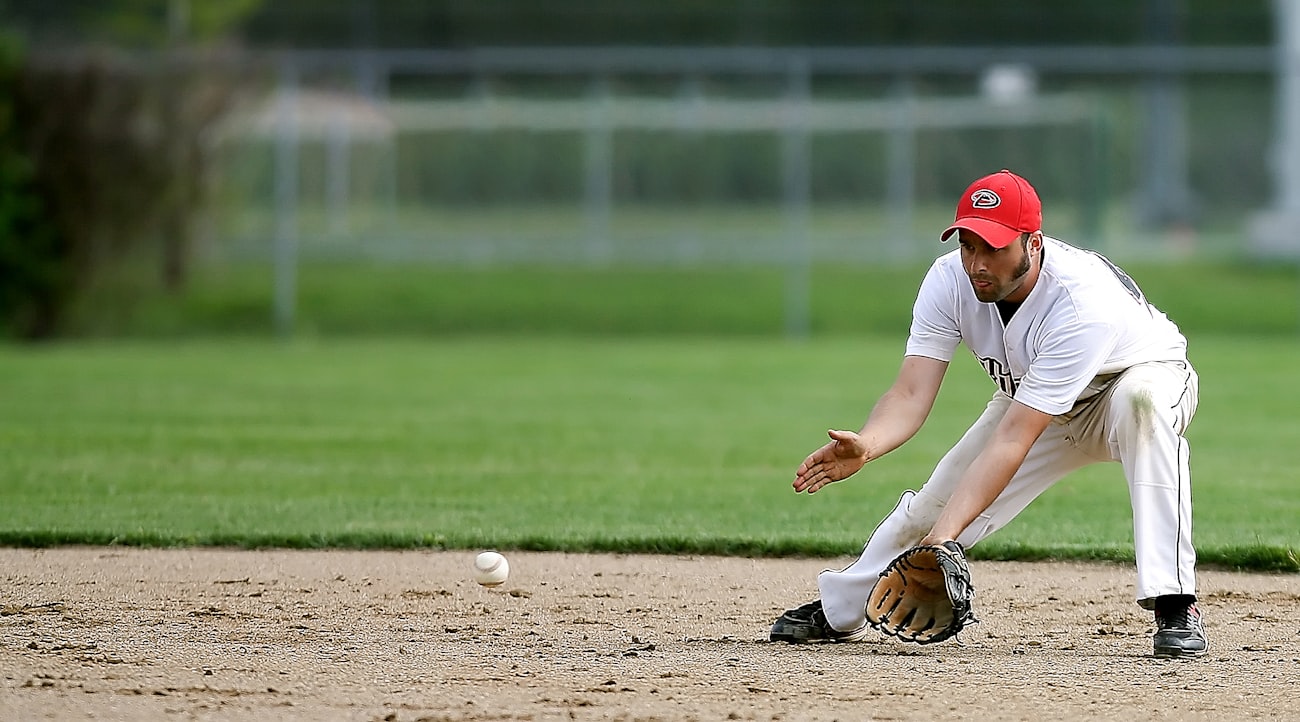
The day after an outing is where most damage is done, because a coach short of infielders puts their best arm at shortstop and nobody counts the forty throws that follow.
Warning Signs
Two-way players show fatigue before they show injury, and the signals are usually visible to a parent before a coach.
- Velocity dropping across an outing or across weeks.
- Command deteriorating without a mechanical explanation.
- Arm slot changing — often unconsciously, to avoid discomfort.
- Reluctance to throw hard from a position.
- Soreness lasting beyond 48 hours.
- A drop in bat performance — fatigue shows at the plate first for many players.
That last one surprises people. Hitting is reaction-dependent, and a tired athlete loses bat speed and decision quality before they lose arm strength — which is why a sudden slump sometimes signals workload rather than mechanics, as our mental game guide notes.
Paediatric sports medicine resources such as Connecticut Children’s publish accessible guidance on overuse in young athletes that is worth reading alongside pitch-count rules.
Talking to Two Coaches
The structural problem is that a two-way player often has two coaches who each see half the workload — a travel coach and a school coach, or a travel coach and a private instructor.
| Who sees what | What they miss |
|---|---|
| Travel coach | School-season innings and weekday games |
| School coach | Weekend tournament pitching |
| Private instructor | Everything outside the lesson |
| Parent | All of it — the only complete view |
A simple shared log fixes most of this. A note in a phone recording date, role and rough throw count takes seconds and gives every coach the same information — which is far more effective than hoping they coordinate.
The Development Argument For Two-Way Play
None of the above is an argument for specialising early. There are real reasons to keep both paths open.
- Physical development between 14 and 17 changes projections dramatically.
- A player who only pitches has no fallback if the arm does not develop.
- Position play builds athleticism that transfers back to the mound.
- Hitting keeps a player engaged in every game rather than every fifth one.
- College and professional paths open at different times for different roles.
The player who was a 13U shortstop and becomes a 17U pitcher is a common story. So is the reverse. Closing either door early removes options for no clear gain — the same argument as our guide on specialisation.
When Choosing Starts to Make Sense
| Stage | Typical picture |
|---|---|
| 13U – 14U | Do both; manage total load |
| 15U | Still both; workload management becomes serious |
| 16U – 17U | Roles start to separate as demands increase |
| College recruiting | Most players are recruited for one role |
| College | Separate practice schedules make two-way rare |
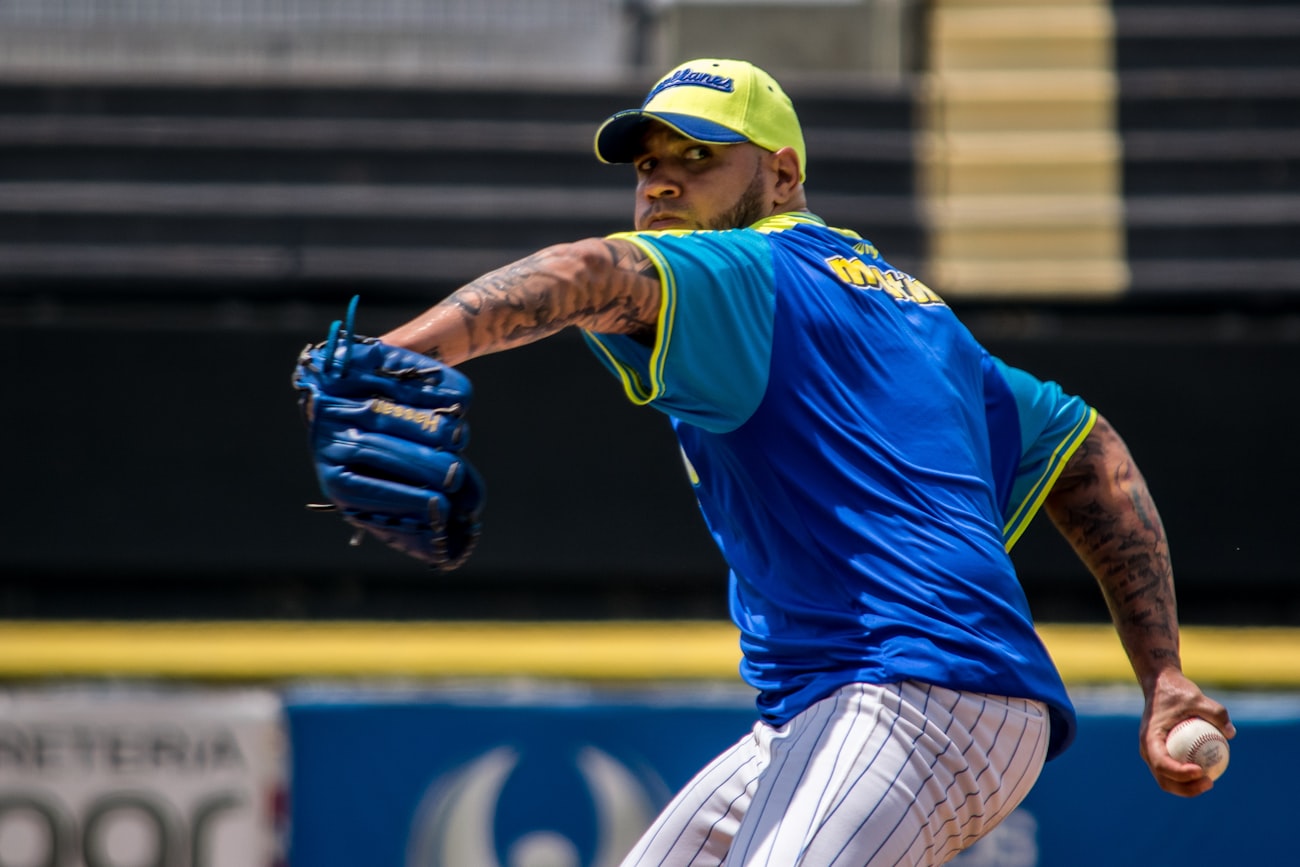
Most college programs eventually ask a recruit to choose, because pitcher and position player workouts run separately and both are heavy. That conversation usually happens during recruiting rather than before it — see our recruiting timeline.
What Parents Should Do
The practical job is simple and nobody else will do it: keep the total.
- Track every throwing role across every team, not just pitching.
- Tell each coach what the player did elsewhere that week.
- Say no to pitcher-plus-catcher weekends.
- Protect the day after an outing.
- Watch for the warning signs above, and act on them early rather than late.
Coaches see one team. Parents see the whole season — which makes this a parent’s job by default, as our parent guide sets out.
Frequently Asked Questions
Can a youth baseball player pitch and play a position?
Yes, and most do at younger ages. It becomes harder to manage from about 15U onward, when pitching workload and position demands both increase and recovery windows shrink.
Is it dangerous for a young player to pitch and catch?
It is the highest-risk combination in youth baseball. Both roles involve high throwing volume, and the totals rarely get counted together. Most coaches advise against pitching and catching in the same weekend.
How do you manage a two-way player’s workload?
Count every throw across both roles, protect rest days after outings, avoid back-to-back high-volume days, and watch for velocity drops or mechanical changes. The total is what matters, not the roles separately.
Should a player specialise as a pitcher or a position player?
Rarely before high school. Physical development changes the picture considerably between 14 and 17, and closing off a path early removes options. Most players should keep both open as long as workload allows.
Do college programs recruit two-way players?
Some do, but it is less common than families expect. Practice and workout schedules at college level are separate and heavy for pitchers and position players, so most recruits are eventually asked to choose.
A Program That Counts the Total
WAR Baseball manages two-way players deliberately, including rest-day positions. See upcoming tryouts for 13U through 17U.