

Ask experienced travel coaches which year separates players most, and most will say the same thing: 13U.
It is the year the field grows. Players who dominated at 12U can look ordinary for months, and families often misread a normal adjustment as a sudden decline. Here is what actually changes and how to get through it.
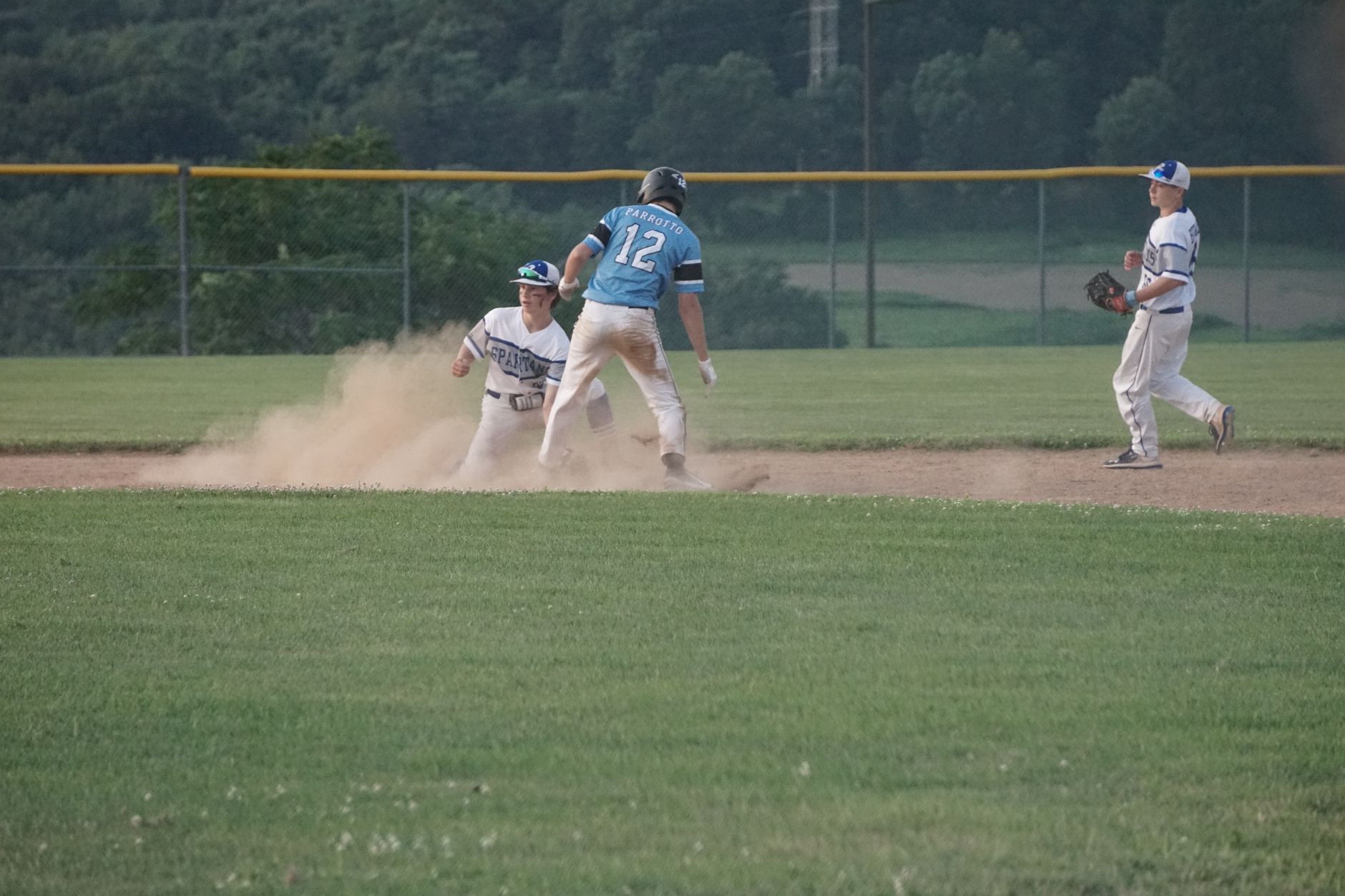
What Changes on the Big Field
The jump is usually described as ‘the mound moves back.’ In reality, every dimension scales at once.
| Dimension | 12U (46/60) | Full field (60/90) | Change |
|---|---|---|---|
| Pitching distance | 46 ft | 60 ft 6 in | +14 ft 6 in |
| Base paths | 60 ft | 90 ft | +30 ft |
| Home to second | About 85 ft | About 127 ft | +42 ft |
| Typical outfield depth | 200-225 ft | 300-330 ft | Roughly +100 ft |
| Lead-offs and pickoffs | Limited or none | Full leads permitted | New skill entirely |
A shortstop who made the throw across the diamond comfortably at 12U now needs meaningfully more arm strength. A catcher’s throw to second grows by more than 40 feet. Outfielders who camped under everything suddenly have real ground to cover.
54/80 and 60/90: Why Both Exist
This is the part that confuses families most, because 13U is not standardised.
| Sanctioning body | 13U dimensions | Notes |
|---|---|---|
| USSSA | 54 ft mound / 80 ft bases | An intermediate step rather than a full jump |
| AAU | Both offered | Separate national tournaments at each size |
| Cal Ripken / middle school | 60 ft 6 in / 90 ft | Full regulation dimensions |
| Most Florida travel baseball | 60 ft 6 in / 90 ft | Florida generally goes straight to big field |
That last row matters for families here. Across much of the Southeast, 13U is played at 54/80 as a stepping stone. Florida generally goes straight to the full 60/90 field.
It is a harder first year — but players arrive at high school having already spent multiple seasons on regulation dimensions, which is a genuine advantage. The dimensions themselves match the high school standard maintained by the National Federation of State High School Associations.
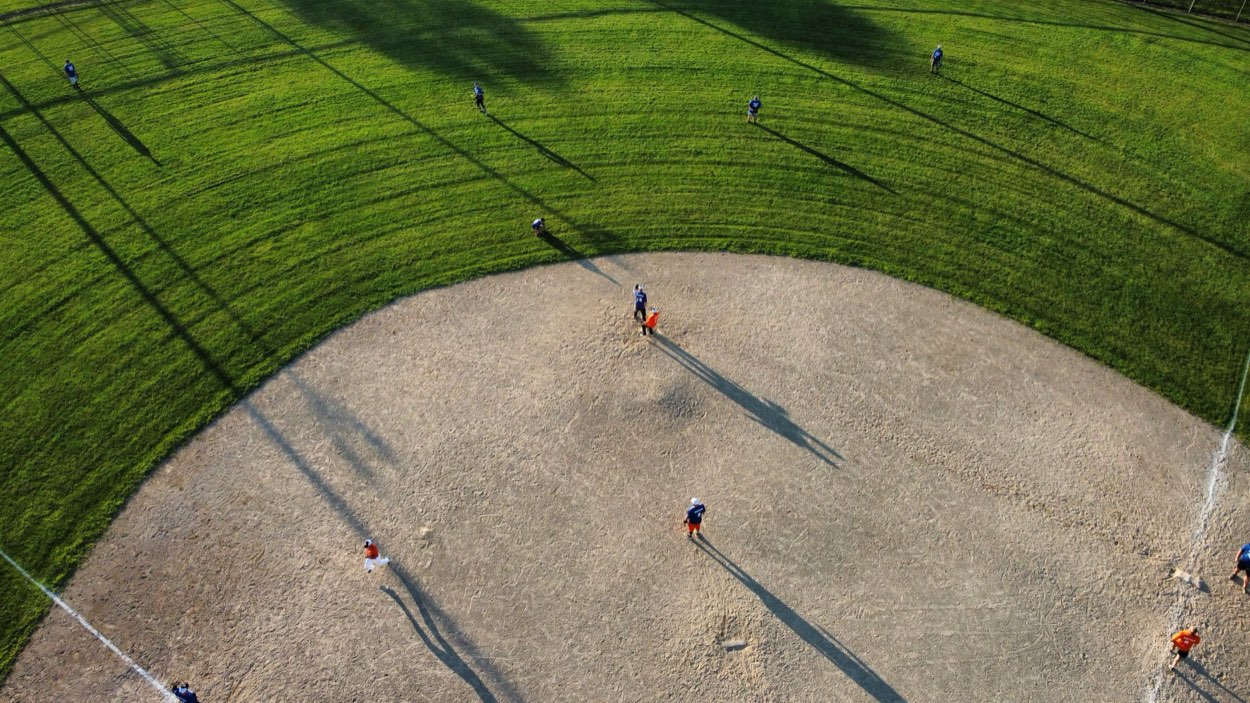
What Changes by Position
| Position | The new demand | What to work on |
|---|---|---|
| Pitcher | 14+ extra feet reduces effective velocity | Command, a real second pitch, leg drive |
| Catcher | Throw to second grows by 40+ feet | Transfer speed, footwork, arm strength |
| Middle infield | Longer throws, far more range required | Long toss, first-step quickness |
| Corner infield | Bigger gaps, harder-hit balls | Reaction work, glove-side range |
| Outfield | Roughly 100 feet more depth to cover | Reads off the bat, routes, throwing |
| Baserunner | Leads and pickoffs are new | Reading pitchers, secondary leads |
Pitching Is the Biggest Adjustment
At 46 feet, a pitcher throwing 60 mph gives hitters roughly the same reaction time as a 78 mph fastball from a regulation mound. Move that same pitcher back to 60 feet 6 inches and the ball arrives dramatically later.
The result is predictable. Pitchers who succeeded by throwing hard past 12U hitters find that the same fastball gets squared up. What works instead is command and a genuine second pitch.
There is a safety dimension here too. The instinct is to throw harder to compensate, exactly when arms are growing fastest and are most vulnerable. Our guide to youth baseball pitch counts and arm care covers the limits that matter most during this year.
Thirteen is the year you find out who can actually pitch, rather than who could just throw hard at a shorter distance.
WAR Baseball coaching staff
What a Realistic First Season Looks Like
- Months 1-2: Numbers drop across the board. Normal, and expected.
- Months 3-4: Defensive footwork settles; throws start carrying.
- Months 5-6: Timing at the plate returns as strength catches up.
- Second season: The field stops feeling big and skill differences re-emerge.
The most common mistake parents make is judging the first two months. A player hitting .400 at 12U who hits .240 in the first half of their 13U season has not regressed — they have changed sports slightly. Coaches expect this, and they evaluate the trend across the season rather than the first few weekends.
How to Prepare
- Long toss, consistently. Arm strength is the single biggest limiter, and it builds slowly over months.
- Lower-body strength. Longer throws and a longer mound distance are driven by legs, not arms.
- Baserunning reps. Leads, secondary leads and reading pickoff moves are new skills that go untaught surprisingly often.
- Patience at the plate. Bigger fields reward line drives in the gaps far more than they reward trying to pull everything.
Should a Player Move Up on Schedule?
Not always. Players who are young for their age group, or physically behind their peers, often benefit from another season at smaller dimensions.
There is no long-term penalty. What matters is arriving at high school strong, confident and healthy — not whether a player moved up exactly on schedule at thirteen. If you are unsure, ask a coach who has seen your player throw and run, not a spreadsheet.
Our staff evaluates this at every tryout, and our coaches have taken players through this transition since 2011. You can see our current age groups on the 13U, 14U and 16U rosters.
For how the age divisions fit together across the state, see our Florida travel baseball guide. If your player is approaching high school and thinking further ahead, our college baseball recruiting timeline lays out what comes next.
Frequently Asked Questions
What size field does 13U baseball play on?
It depends on the sanctioning body. USSSA and some AAU divisions play 13U at 54 feet to the mound with 80-foot bases. Florida travel baseball, Cal Ripken and most middle school programs play the full 60 feet 6 inches with 90-foot bases. Always confirm before the season.
Why is the jump to the big field so difficult?
Everything scales at once. Base paths grow by 10-20 feet, the mound moves back, and the outfield gets larger. Throws that were routine become long, stolen bases get harder, and pitchers who dominated on a short mound suddenly need real velocity and command.
How long does it take to adjust to the 60/90 field?
Most players need a full season. Physical strength catches up over 12-18 months, and arm strength typically lags the hardest. Expect a dip in production during the first few months and judge progress over the year, not the first month.
Should my player repeat a year at the smaller field?
Sometimes. Players who are young for their age group or physically behind often benefit from another season at 54/80. There is no long-term disadvantage — arriving at high school strong matters far more than moving up on schedule.
What changes most for pitchers at 13U?
The mound moves back to 60 feet 6 inches, which reduces effective velocity and exposes weak command. Pitchers who relied on throwing hard past hitters need to develop a genuine second pitch and locate the fastball to both sides of the plate.
13U Tryouts in Tallahassee
WAR Baseball fields a 13U team that plays full 60/90 dimensions. Our coaches have guided players through this transition for over a decade.