
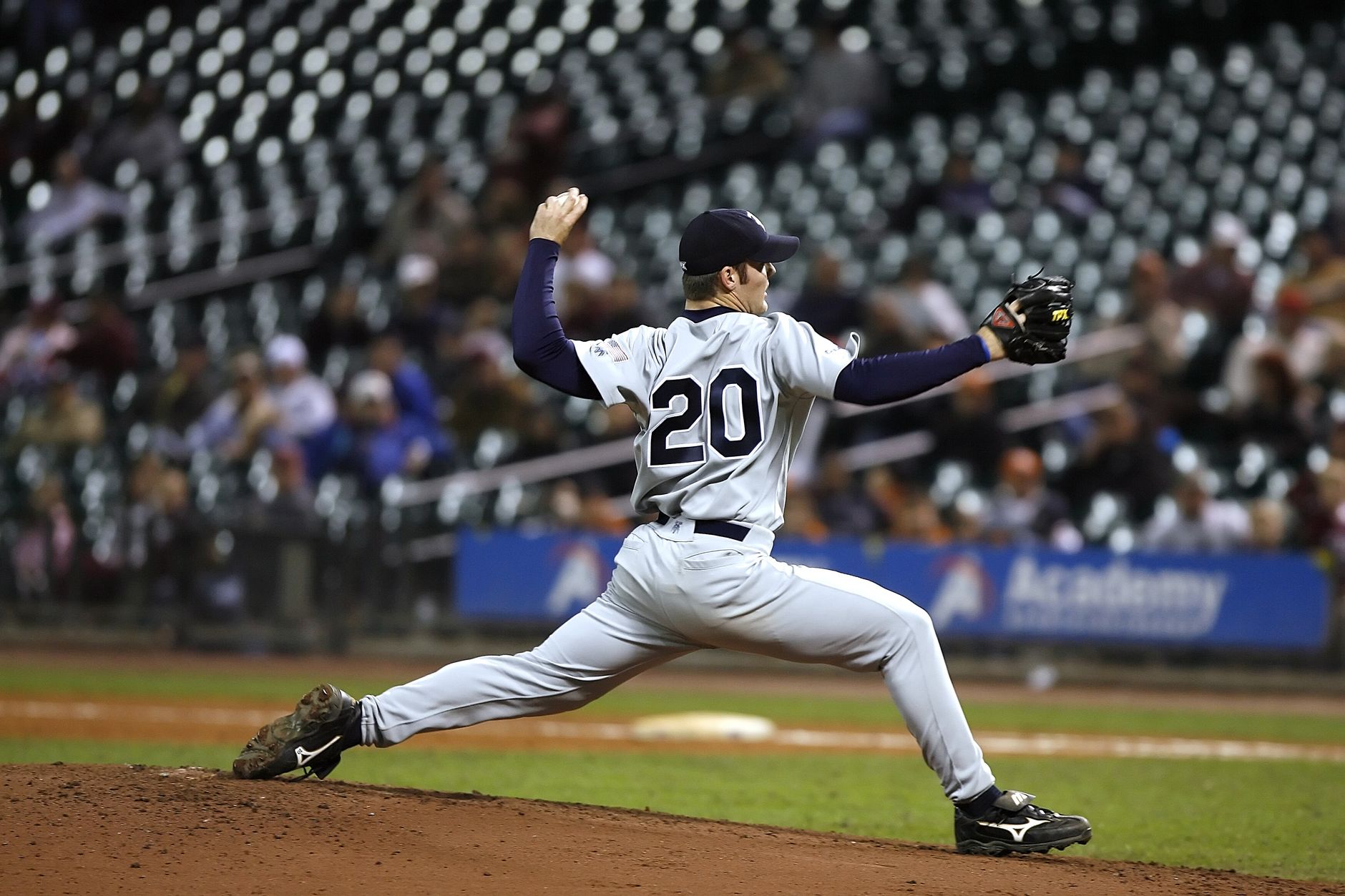
Arm injuries in youth baseball have risen sharply, and the cause is not mysterious. Young players throw more, year-round, across more teams than any previous generation.
The encouraging part is that the main risk factors are largely preventable, and they come down to volume, fatigue and rest. Here is what parents need to track.
Daily Pitch Count Limits by Age
These limits are widely adopted across youth baseball and are the baseline most tournament organisations enforce.
| Age | Maximum pitches per day |
|---|---|
| 7-8 | 50 |
| 9-10 | 75 |
| 11-12 | 85 |
| 13-14 | 95 |
| 15-16 | 95 |
| 17-18 | 105 |
The word maximum matters. These are ceilings, not goals. Most outings should finish comfortably below the limit, particularly early in the season or after time away from throwing.
Required Rest Days
Rest is where guidelines are most often broken, usually because a tournament weekend creates pressure to use a pitcher again on Sunday.
| Pitches thrown | Rest required (ages 7-14) | Rest required (ages 15-18) |
|---|---|---|
| 1 – 20 | None | None |
| 21 – 35 | 1 day | None (to 30) |
| 36 – 50 | 2 days | 1 day (31-45) |
| 51 – 65 | 3 days | 2 days (46-60) |
| 66+ | 4 days | 3 days (61-80), 4 days (81+) |
One rule sits above the table: no youth pitcher should throw on three consecutive days, regardless of pitch count. Cumulative fatigue builds in ways that daily limits alone do not capture.
Fatigue is the single strongest predictor of arm injury in young pitchers — more than curveballs, more than mechanics.
The consistent finding across sports medicine research
The Multi-Team Problem
This is the most dangerous gap in travel baseball, and it is almost always invisible to each individual coach.
A player pitches Saturday for his travel team, then Monday for his school team. Each coach sees a reasonable outing. Neither sees the total. Research consistently finds that playing for multiple teams simultaneously raises injury risk substantially.
- Keep a single running pitch log across every team.
- Tell each coach what your player threw and when — do not assume they will ask.
- Count showcase innings, bullpens and lessons, not just games.
- If two teams want the same arm in one weekend, someone has to say no.
Parents are the only people who see the complete picture. That makes tracking a parent job, not a coaching one.
What Counts as a Pitch
Official pitch counts record game pitches only. Young arms do not make that distinction, and the throws that go uncounted are often where the real volume hides.
| Throwing | Counted officially? | Counts for the arm? |
|---|---|---|
| Game pitches | Yes | Yes |
| Bullpen / warm-up before an inning | No | Yes |
| Pre-game bullpen session | No | Yes |
| Private pitching lessons | No | Yes |
| Showcase velocity testing | Rarely | Yes — often max effort |
| Infield throws across the diamond | No | Partially — cumulative stress |
A pitcher who throws 80 in a game may have added 30 more in warm-ups and bullpens. Track the total, and be especially cautious with showcase events, where players throw at maximum effort to post a velocity number.
Warning Signs
| Sign | What it often means | What to do |
|---|---|---|
| Pain during throwing | Tissue stress — never normal | Stop; evaluate before returning |
| Soreness lasting past 48 hours | Inadequate recovery | Extend rest; reduce volume |
| Velocity drop | Accumulated fatigue | Rest before it becomes injury |
| Loss of command | Often fatigue, not mechanics | Reduce workload before adjusting mechanics |
| Changed arm slot | Compensating for discomfort | Ask directly; players hide pain |
| Reduced range of motion | Early overuse indicator | Evaluation recommended |
Young players routinely hide pain because they want to compete. Ask specific questions — ‘does it hurt when you throw?’ gets a more honest answer than ‘are you okay?’ Make clear that reporting soreness will not cost them innings, or they will simply stop telling you.
The American Academy of Orthopaedic Surgeons’ guidance on throwing injuries in children is a useful reference on why growth plates make young arms particularly vulnerable, and when to seek evaluation.
The Off-Season Is Not Optional
Sports medicine guidance consistently recommends at least two to three months per year away from overhead throwing, and at least four months away from competitive pitching.
In a sport that now runs fall, spring and summer seasons, that requires a deliberate decision. Year-round play is one of the strongest predictors of arm injury in young players — and a program that offers no off-season is a warning sign, not a mark of seriousness.
It is a fair question to ask any program directly, alongside the others in our travel versus rec baseball comparison.
Building a Durable Arm
- Long toss — builds arm strength progressively rather than through max-effort innings.
- Lower body and core strength — a lot of arm stress traces back to weak legs.
- Proper warm-up — never let a player throw hard without building up.
- Play other positions and other sports — varied movement reduces repetitive stress.
- Sleep — the single most underrated recovery tool for adolescent athletes.
- A real off-season — structured properly, as our off-season training guide sets out.
Our teams train speed, agility and conditioning as part of team membership at Powermill, and our coaching staff includes a six-year professional pitcher who threw 225 games professionally. Managing young arms is not an afterthought for us.
If your player is entering the year when arm demands rise most, our guide to the 13U jump to the big field covers what changes and why the temptation to overthrow is strongest then. Players with college ambitions should also read our recruiting timeline — health is a prerequisite for all of it.
Frequently Asked Questions
How many pitches should a youth pitcher throw?
Widely used guidelines cap daily pitches at 50 for ages 7-8, 75 for ages 9-10, 85 for ages 11-12, 95 for ages 13-16 and 105 for ages 17-18. These are ceilings, not targets — most outings should finish well below the maximum.
How many rest days does a young pitcher need?
For ages 7-14: one day of rest after 21-35 pitches, two days after 36-50, three days after 51-65 and four days after 66 or more. Ages 15-18 use slightly higher thresholds. No youth pitcher should throw on three consecutive days.
Should young pitchers throw curveballs?
The bigger risk factor is volume and fatigue rather than pitch type. Most coaches and sports medicine guidance recommend establishing fastball command and a changeup first, and introducing breaking balls only once mechanics are consistent.
How much time off should a baseball player take each year?
Sports medicine guidance recommends at least two to three months per year away from overhead throwing, and at least four months away from competitive pitching. Year-round play is one of the strongest predictors of arm injury in young players.
What are the warning signs of an arm injury?
Pain during or after throwing, a drop in velocity, loss of command, decreased range of motion, and a player quietly changing their arm slot. Any pain that persists after rest warrants evaluation before returning to throwing.
Join a Program That Manages Arms Properly
WAR Baseball builds conditioning and arm care into team training. See our upcoming tryouts for 13U through 17U in Tallahassee.