

Somewhere around age eleven or twelve, most baseball families face the same pressure. A travel coach mentions that serious players train year-round. Another sport’s season overlaps. A choice seems to be required.
It is worth knowing that the research on this question is unusually clear — and it points the opposite way from the pressure.
What Specialization Actually Means
Researchers generally define sport specialization by three conditions: intensive year-round training, participation in one sport at the exclusion of others, and involvement for more than eight months per year.
Meeting all three is what raises risk most sharply. A player who plays travel baseball in spring and summer but runs track in the winter is not specialized in this sense.
The Injury Evidence
| Finding | What the research shows |
|---|---|
| Innings volume | Pitchers throwing 100+ innings per year were ~3.5x more likely to be injured |
| Months per year | Pitching more than 8 months/year significantly raised risk of shoulder or elbow surgery |
| Arm injury frequency | Higher among specialized players than non-specialized players |
| Across sports | Specialization is repeatedly identified as an overuse injury risk factor |
| Movement quality | Multi-sport youth developed better landing mechanics than single-sport peers |
Baseball is a particularly poor sport for specialization because the throwing motion is both repetitive and unusually stressful on a developing elbow and shoulder. A player who only plays baseball does the same high-stress movement year-round.
Growth plates compound the problem. Adolescent elbows and shoulders are still developing, and the tissue absorbing that repeated stress is measurably more vulnerable than an adult’s — which is why the injuries showing up in fourteen-year-olds were once seen mainly in professionals.
The Performance Argument
The common assumption is that specialization is the cost of getting good. The evidence suggests the opposite.
Studies of professional baseball players found they generally played multiple sports as children and specialized later than athletes who topped out at lower levels. A broader base of motor skills appears to help rather than hinder.
| Early specialization | Multi-sport until 15-16 | |
|---|---|---|
| Injury risk | Elevated, particularly overuse | Lower |
| Athletic base | Narrow, sport-specific | Broader movement vocabulary |
| Burnout risk | Higher | Lower |
| Skill ceiling | No demonstrated advantage | No demonstrated disadvantage |
| Elite outcomes | Common among lower-level athletes | Common among professionals |
The players who make it tend to be the best athletes, not the ones who played the most baseball.
A consistent finding across the research
What Other Sports Give a Baseball Player
| Sport | Transferable benefit |
|---|---|
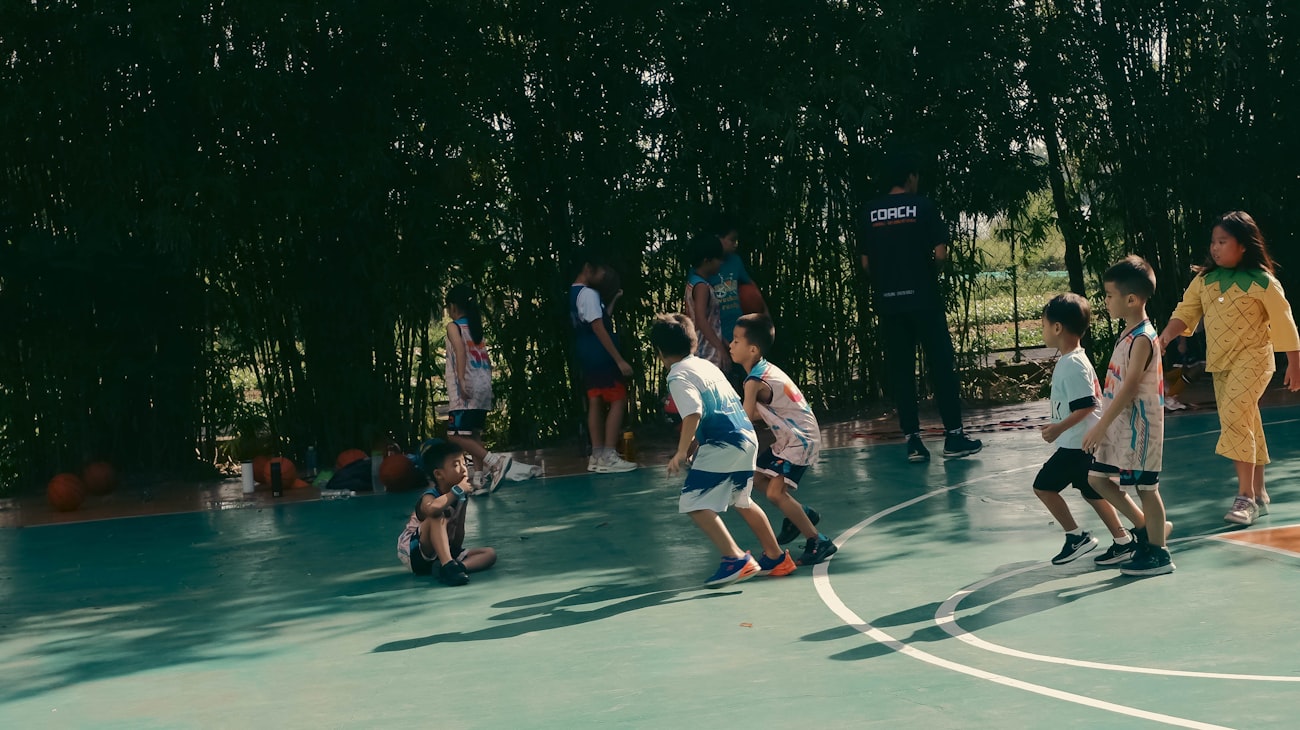
| Basketball | Lateral movement, explosive jumping, hand-eye coordination |
| Football | Strength, physicality, competitive toughness |
| Track and field | Sprint mechanics — directly improves the 60-yard dash |
| Soccer | Conditioning, lower-body strength, spatial awareness |
| Swimming | Shoulder health, conditioning without impact |
Track is worth singling out. The 60-yard dash is the universal athleticism screen in baseball recruiting, and sprint coaching improves it faster than anything a baseball practice does — something we cover in our off-season training guide.
When Specialization Starts to Make Sense
This is not an argument that nobody should ever specialize. It is an argument about timing.
- Age 15-16 and above is the range most guidance points to.
- The player is driving it, not a parent or a coach.
- There is still a genuine off-season — at least two to three months away from throwing.
- Realistic goals exist — the player is tracking toward college-level ability.
- Training is supervised by people who understand adolescent development.
The American Academy of Pediatrics’ guidance for young athletes is a useful reference for parents weighing this decision, covering rest, specialization and overuse injury together.

Burnout Is the Other Half of the Problem
Injury gets the attention, but attrition quietly does more damage. A large share of young athletes stop playing organised sport in their early teens, and the reasons they give are consistent: it stopped being fun, and the pressure outweighed the enjoyment.
| Warning sign | What it often means |
|---|---|
| Dreading practice | Load or pressure has exceeded enjoyment |
| No interest outside organised sessions | The internal motivation has gone |
| Frequent vague complaints of soreness | Sometimes physical, often avoidance |
| Irritability about the schedule | Too little unstructured time |
| Relief when an event is cancelled | The clearest signal of all |
The awkward truth is that specialization and burnout reinforce each other. A player who has given up every other sport has nothing to fall back on when baseball stops being fun — and quitting entirely becomes the only exit.
Handling It Practically
The conflict is usually a calendar problem rather than a philosophical one. Fall baseball overlaps with football. Winter workouts overlap with basketball.
- Have the conversation with both coaches early — before schedules are set.
- Accept that your player will miss some events, and say so upfront.
- Protect the throwing break regardless of which sport is in season.
- Watch total load, not just baseball load. A three-sport athlete with no rest is still at risk.
- If a program will not accommodate another sport at all, weigh that carefully.
For what it is worth, we would rather have a player for two seasons who arrives healthy and athletic than have them year-round and lose them to an elbow injury at fifteen. Our FAQ sets out our season structure, and our tournament schedule shows the actual commitment involved.

The Bottom Line
Playing baseball year-round from age ten does not produce better baseball players. The research points consistently toward more injuries, more burnout and no measurable performance advantage.
Play other sports. Take real time off from throwing. Specialize when your player is old enough and wants it — and read our arm care guide before the innings start adding up. If you are still weighing the broader commitment, our comparison of travel and rec baseball covers the trade-offs.
Frequently Asked Questions
At what age should a player specialize in baseball?
Most sports medicine guidance recommends delaying single-sport specialization until at least age 15 or 16. Before that, playing multiple sports builds broader athletic ability and is consistently associated with lower injury rates.
Does specializing early improve the odds of playing college baseball?
The evidence does not support it. Studies of professional baseball players found they typically played multiple sports as children and specialized later than their lower-level peers. Early specialization raises injury risk without a clear performance benefit.
How many innings is too many for a youth pitcher?
Research found that youth pitchers throwing more than 100 innings in a year were about 3.5 times more likely to be injured. Pitching more than eight months per year is associated with a significantly increased risk of shoulder or elbow surgery.
Can a player play travel baseball and another sport?
Yes, and many of the best athletes do. It requires honest scheduling conversations with both coaches, and it usually means missing some events. A program unwilling to have that conversation is telling you something useful.
What counts as sport specialization?
The common definition is intensive year-round training in a single sport, at the exclusion of other sports, for more than eight months per year. Meeting all three conditions is what raises risk most sharply.
A Program That Respects the Off-Season
WAR Baseball runs defined fall and spring seasons with real breaks. Come see how we develop players in Tallahassee.