

Every parent eventually asks some version of the same question, usually silently: why is my kid batting there?
The honest answer is that batting order is a smaller lever than it feels from the bleachers, and that the thinking behind it has changed considerably in the last two decades.
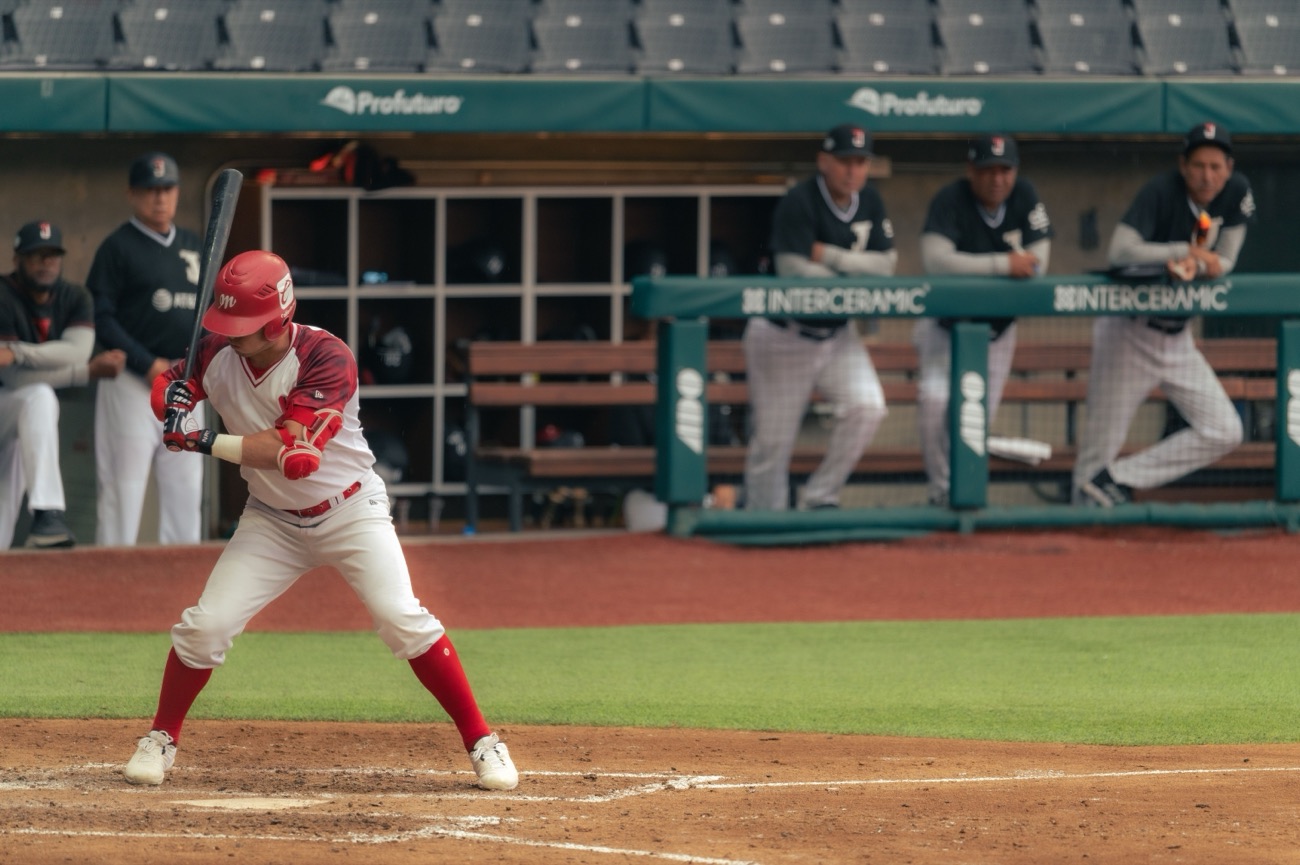
The Traditional Logic
Most people learned a version of this, and much of youth baseball still runs on it.
| Spot | Traditional role |
|---|---|
| 1 | Fast, gets on base, causes disruption |
| 2 | Contact hitter who can bunt and move runners |
| 3 | Best all-round hitter |
| 4 | Power — the cleanup hitter |
| 5 | Secondary power |
| 6-9 | Descending order of ability |
It is intuitive and it is not wrong exactly. It is just built on an assumption that turns out not to survive examination — that the third and fourth spots are where the most valuable opportunities occur.
What Changed
The realisation was simple arithmetic: the earlier a spot in the order, the more times it bats across a season.
At major league level the leadoff spot accumulates well over a thousand more plate appearances across a season than the cleanup spot. Giving those extra opportunities to a weaker hitter, purely to reserve a stronger one for the fourth spot, costs runs.
Your best hitters should bat as often as possible. Everything else in lineup construction is a refinement of that.
The modern principle in one sentence
| Spot | Modern thinking |
|---|---|
| 1 | One of your two best hitters — maximum plate appearances |
| 2 | Often the best hitter — volume plus runners on |
| 3 | Strong, but less premium than traditionally assumed |
| 4 | Power, with someone competent behind to prevent walks |
| 5-9 | Descending, with on-base ability valued ahead of the top |
Analysis of lineup construction is a long-running topic at outlets such as Baseball Prospectus, which has published extensively on how much — or how little — order actually contributes to run scoring.
How Much Does It Actually Matter?
This is the part worth internalising before getting upset about a spot in the order.
Lineup optimisation studies consistently find that the gap between a sensibly constructed order and a mathematically optimal one is small across a full season — a handful of runs. Between two reasonable youth orders, over a weekend tournament, it is close to noise.
| Factor | Effect on scoring |
|---|---|
| Quality of the hitters | Enormous |
| Getting on base at all | Very large |
| Order of those hitters | Small |
| Batting ninth versus sixth | Negligible over a season |
| Batting the whole roster | Negligible competitively; large developmentally |

Youth Baseball Is Different Anyway
Several things make the professional logic only partly applicable to a 13U team.
- Most youth teams bat the entire roster, so everyone hits regardless.
- Development outweighs optimisation at these ages.
- Coaches rotate the order deliberately, to give different players different situations.
- Pitching dominates outcomes more than sequencing does.
- Rosters change weekly with availability.
Batting the whole roster is generally good practice. It guarantees at-bats, removes a source of friction between families, and at developmental ages the participation is worth more than the marginal run expectancy.
Why Your Player Might Bat Ninth
| Possible reason | What it means |
|---|---|
| Balancing the order | Coach wants a competent hitter turning it over |
| Speed at the bottom | Ninth acts as a second leadoff spot |
| Handedness alternation | Breaking up same-handed hitters |
| Recent form | Temporary, and usually revisited |
| Development stage | Lower-leverage spot while building confidence |
| It is a rotation | Many youth coaches simply rotate |
Note that several of these are compliments rather than demotions. Coaches frequently place a fast, contact-oriented player ninth precisely because it functions as a second leadoff spot ahead of the top of the order.
What Coaches Are Actually Balancing
A lineup card looks like a ranking. It is usually a set of competing constraints.
| Constraint | Effect on the order |
|---|---|
| Who is available this weekend | Reshuffles everything week to week |
| Pitchers needing rest days | Some players are unavailable to hit high in the order |
| Catcher rotation | A catcher may bat lower on a day they are catching |
| Handedness of the opposing pitcher | Alternating batters becomes situational |
| Development goals for individual players | A coach may deliberately give someone leverage |
| Keeping the roster engaged | Rotation matters more than optimisation |
The last two rows are the ones parents rarely see. A coach may bat a player higher precisely because they need the experience, or rotate the order so nobody becomes fixed in a role at thirteen.
If You Want to Ask
It is a reasonable question, asked the right way and by the right person.
- Have the player ask, not the parent.
- Ask what to work on to move up, not why they are batting ninth.
- Wait at least a day after a game.
- Ask once. Repeating it becomes a different conversation.
- Accept the answer and get back to work.
A player who asks a coach what they need to improve gets useful information and demonstrates exactly the self-advocacy that matters later — the same principle in our parent guide and our recruiting timeline.
What Actually Moves a Player Up
Not conversations. On-base ability, contact quality and reliability.
The fastest route up a youth batting order is being hard to get out — putting the ball in play, not striking out, running hard. Power arrives with physical development, as our bat speed guide and growth guide both explain, but contact and competitiveness are available immediately.
Coaches notice the player they trust with two outs and a runner on second. That trust is earned in practice long before it shows up on a lineup card.
Frequently Asked Questions
How do coaches decide the batting order?
By balancing who gets the most plate appearances against who is most likely to produce with runners on. Modern thinking puts the best hitters at the very top rather than saving them for third or fourth, because the leadoff spot bats most often.
Why does my child bat ninth?
Usually because the coach is balancing the lineup, not making a judgement about worth. In youth baseball many teams also bat the entire roster, which makes the order far less consequential than it feels.
What is the best spot in the batting order?
In modern analysis, second. The two-hole combines a high volume of plate appearances with frequent opportunities with runners on base, which is why many teams now put their best hitter there.
Does batting order actually matter much?
Less than most families think. Studies of lineup optimisation suggest the difference between a good and an optimal order is small over a season — and in youth baseball, where rosters bat around, it matters even less.
Should youth teams bat the whole roster?
Most do, and it is generally good practice. It guarantees every player at-bats, removes a source of friction, and at developmental ages participation matters more than optimising run expectancy.
Earn Your Spot
WAR Baseball develops hitters across 13U through 17U. See upcoming tryouts in Tallahassee and get an honest evaluation.