
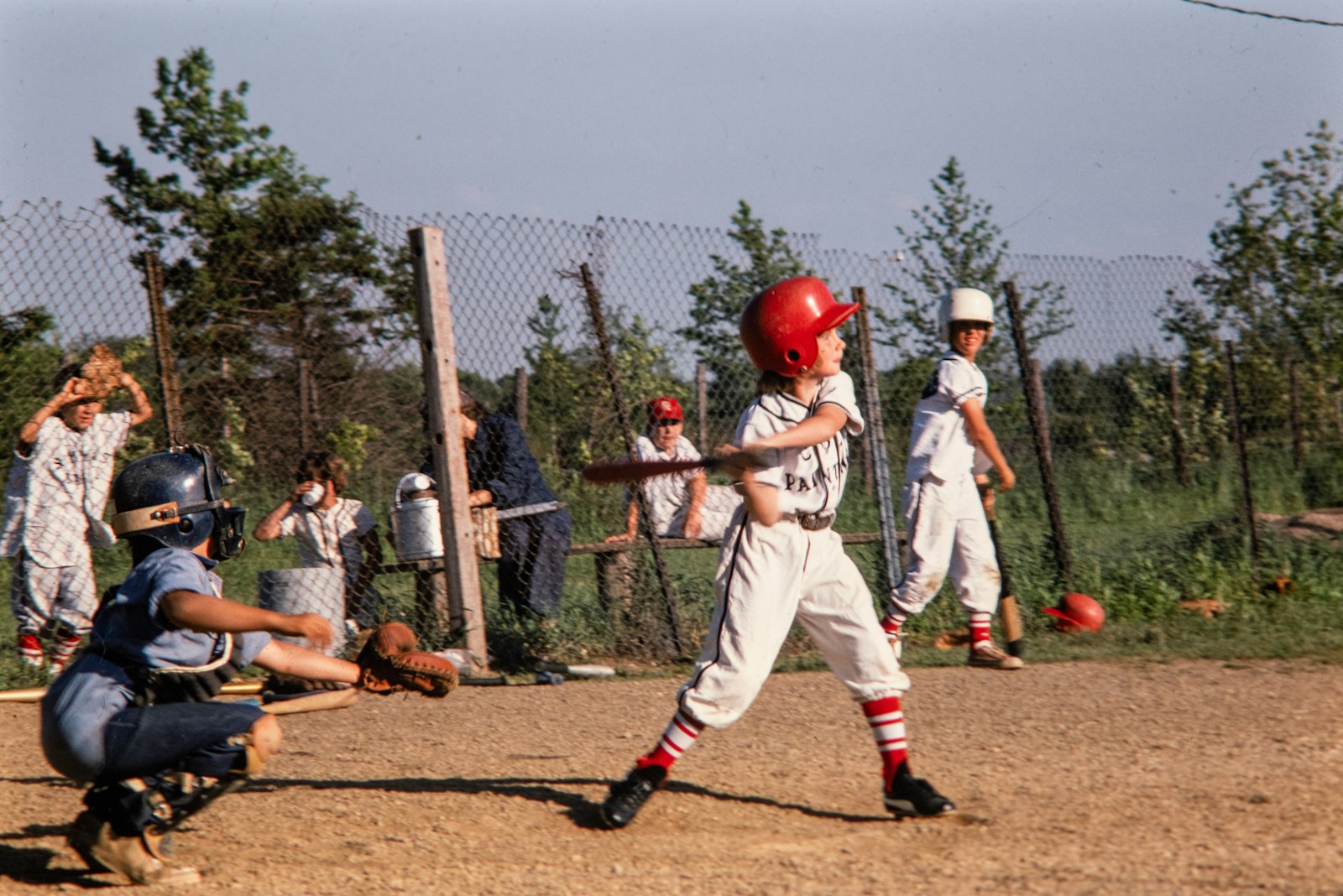
A girl who loves baseball will be told, repeatedly and from a young age, that she should be playing softball.
There is no rule requiring that. But the pathways genuinely do diverge, and families deserve an honest picture of where and why rather than either encouragement or discouragement.

The Rules Are Not the Barrier
Girls can play Little League. Girls can play on travel teams. Girls can try out for high school baseball teams. None of that is prohibited, and thousands do.
What changes is infrastructure. The opportunities that exist at nine narrow considerably by fourteen, and the reason is not regulation — it is that the organised pathways were built for one route.
| Age | Baseball options for girls |
|---|---|
| 6-12 | Broad — Little League, rec ball, travel teams |
| 13-14 | Narrowing; often the only girl on a roster |
| 15-18 | High school boys’ team, or club/organisation events |
| College | Almost none — no established women’s programmes |
| Beyond | Emerging, including a new professional league |
The question is rarely whether she can play now. It is what happens at fourteen, and families deserve to know that in advance.
The honest framing
Why Families Get Steered to Softball
- Visible pathways. Softball has high school programmes and college scholarships; baseball does not offer girls the equivalent.
- Scholarship maths. A concrete route to college aid is a powerful argument.
- Social pressure. Being the only girl on a roster is genuinely hard for some players.
- Coaching and facilities are organised around the assumption.
- Convention. Frequently nobody decides — it just happens.
None of those are bad-faith reasons. A family steering a daughter toward softball is usually responding rationally to where the opportunities are. But it is worth being explicit that it is a choice about pathways rather than about ability.
What Girls in Baseball Face
| Challenge | Reality |
|---|---|
| Being the only girl | Common from around 12U onward |
| Changing facilities | Frequently unaddressed by venues |
| Assumption of lower ability | Has to be disproved repeatedly |
| Thinning options after Little League | The main structural barrier |
| No college pathway | The hardest fact to plan around |
| Teammates and coaches | Usually fine — and often actively supportive |
The last row is worth stating. Most youth teams accept a good player regardless, and the difficulties are more often structural than interpersonal.
Baseball or Softball: An Honest Comparison
| Baseball | Softball | |
|---|---|---|
| Youth access for girls | Open | Open |
| High school programme | Boys’ team by tryout | Dedicated programme |
| College pathway | Almost none | Established, with scholarships |
| Professional | Newly emerging | Established |
| Skill transfer between them | Considerable, but not identical | Considerable |
| Being the only girl | Likely from around 12U | Not an issue |
The college row is the one that drives most family decisions, and it is a genuine difference rather than a perception. Softball offers a route to a scholarship that girls’ baseball currently does not — our college paths guide covers how that kind of aid actually works.
Where the Opportunities Are
They exist, and they have expanded considerably in recent years.
- Little League and local travel teams — open to girls throughout.
- Girls’ baseball tournaments and development events run by dedicated organisations.
- High school teams by tryout, as with any player.
- National team pathways exist for women’s baseball.
- A professional women’s league has recently launched, drawing entrants internationally.
Organisations such as Baseball For All run girls’ baseball tournaments and development programming specifically to keep the pathway open past the age it usually closes, and are working toward collegiate club opportunities.
Questions Worth Asking a Programme
Before committing to a team, a short conversation tells you most of what you need to know.
- Has a girl played in this programme before, and how did it go?
- What are the changing arrangements at home and at away venues?
- How does the coaching staff handle it if a teammate or opponent says something?
- Will she be evaluated on the same criteria as everyone else?
- Is there a plan for the older age groups, or only for this season?
The answers matter less than the reaction. A programme that has thought about these questions gives specific answers; one that has not will say it has never come up — which is itself the answer. Our guide to talking with coaches covers how to open that conversation well.
Deciding as a Family
| Question | Why it matters |
|---|---|
| Does she want to play baseball, or a sport? | The honest answer shapes everything |
| How would she handle being the only girl? | Varies enormously by child |
| Is a college pathway a family priority? | Softball offers one; baseball does not |
| Are there girls’ baseball events reachable? | Changes the picture considerably |
| Can she try both? | Often the best answer at younger ages |
The last row is genuinely available to most families before about twelve. Playing both for a season or two answers the question more reliably than any discussion — and multi-sport participation is developmentally sound anyway, as our specialisation guide sets out.

If She Plays Baseball
- Judge her as a player. The same standards, the same feedback.
- Ask the programme directly about facilities and expectations.
- Find other girls playing where possible — isolation is the main attrition driver.
- Prepare her for the assumption that she is there to make up numbers.
- Be honest about the pathway rather than promising something that may not exist.
- Let her decide when the calculation changes, as our guide on wanting to stop covers.
Being coached identically to everyone else is what most girls in baseball say they want. Our tryout guide and teammate guide apply the same way regardless.
Where We Stand
Our tryouts are open to any player in the relevant age groups. We evaluate arm, speed, hands, bat and makeup, and that is the whole assessment.
We would not pretend the college pathway is the same, because it is not — and a family deserves that stated plainly rather than discovered at sixteen. What we can say is that a player who can play will be coached like a player who can play.
If you have a daughter who wants to play baseball and you want a straight conversation about it, get in touch.
Frequently Asked Questions
Can girls play baseball?
Yes. There is no rule preventing girls from playing baseball at youth level, in Little League, on travel teams or on high school teams. The barriers are social and structural rather than regulatory.
Why are girls pushed toward softball?
Largely convention and infrastructure. Softball has established pathways to high school and college scholarships, while girls’ baseball pathways thin out sharply after Little League age — so families are steered toward the route with visible opportunities.
Can a girl play high school baseball?
Generally yes, by trying out for the team. Schools do not typically field separate girls’ baseball programmes, so it means competing for a place on the boys’ roster.
Is there college baseball for women?
Very little. There are no established women’s college baseball programmes, though a small number of women have played on men’s collegiate teams and club programmes are emerging.
Where can a girl find baseball opportunities?
Little League and local travel teams accept girls. Beyond that, organisations such as Baseball For All run girls’ tournaments and development events, and a professional women’s league has recently launched.
Tryouts Are Open to Any Player
WAR Baseball evaluates every player on the same criteria. See upcoming tryouts for 13U through 17U in Tallahassee.