
Every young pitcher wants two things: to throw harder and to have a nasty breaking ball. Both are reasonable ambitions, and both are usually pursued in the wrong order.
Here is how pitchers actually develop — the sequence that produces effective, healthy arms rather than twelve-year-olds with sore elbows and a curveball.
Command Comes First
Control and command are not the same thing. Control is throwing strikes. Command is throwing a pitch to a specific spot within the zone.
Until roughly high school, command beats velocity almost every time. A pitcher who can locate a fastball to both sides of the plate and throw a changeup for a strike in any count will consistently out-perform a harder thrower who cannot.
This becomes obvious at 13U, when the mound moves back to full distance and velocity that dominated on a shorter mound suddenly gets squared up — a transition our 13U big-field guide covers in detail.
The Arsenal, in Order
| Pitch | When to develop | Why |
|---|---|---|
| Four-seam fastball | From the start | The foundation of everything; command it first |
| Changeup | 9-12 | Safest off-speed pitch; same arm action as the fastball |
| Two-seam / sinker | 13-14 | Movement variation with low added stress |
| Curveball | 13-14 at the earliest | Requires forearm strength and consistent mechanics |
| Slider | Not before 14-15 | Highest stress; only with mature mechanics |
| Cutter / splitter | 16+ | Advanced; rarely needed in youth baseball |
The changeup is the single most underused pitch in youth baseball. It is thrown with fastball arm speed and fastball arm action, which makes it both effective and low-stress — and developing a good one early is among the stronger indicators of long-term success.
Two pitches commanded beats four pitches thrown. Almost every young pitcher would be better with a fastball and a real changeup than with a four-pitch mix they cannot locate.
WAR Baseball coaching staff
The Curveball Question
This is the most argued-about topic in youth pitching, and the evidence is more nuanced than either camp claims.
The research points more strongly at volume and fatigue than at pitch type as the primary injury driver. A curveball thrown with sound mechanics by a fresh pitcher is not the villain it is often portrayed as.
But two things remain true. A breaking ball thrown by a tired pitcher with immature mechanics is a genuine risk. And most young pitchers simply do not need one — they would gain more from commanding two pitches.
The American Sports Medicine Institute, which has studied pitching biomechanics and youth arm injuries more extensively than any other group, is the reference worth reading on this.
Our pitch count and arm care guide covers the volume half of the equation, which is the part that actually predicts injury.
Building Velocity Safely
| Input | Velocity effect | Risk |
|---|---|---|
| Lower-body and core strength | High | Low when supervised |
| Structured long toss | High | Low to moderate |
| Mechanical efficiency | Moderate to high | Low |
| Mobility — hips and thoracic spine | Moderate | Very low |
| Throwing more bullpens | Low | High |
| Weighted balls | Variable | High without expert supervision |
| Maximum-effort throwing year-round | Low | Very high |
Velocity largely arrives with physical maturity and strength. A thirteen-year-old chasing mph through throwing volume is taking the highest-risk route to something that will come anyway — our off-season training guide sets out the alternative.
Mechanics Worth Coaching
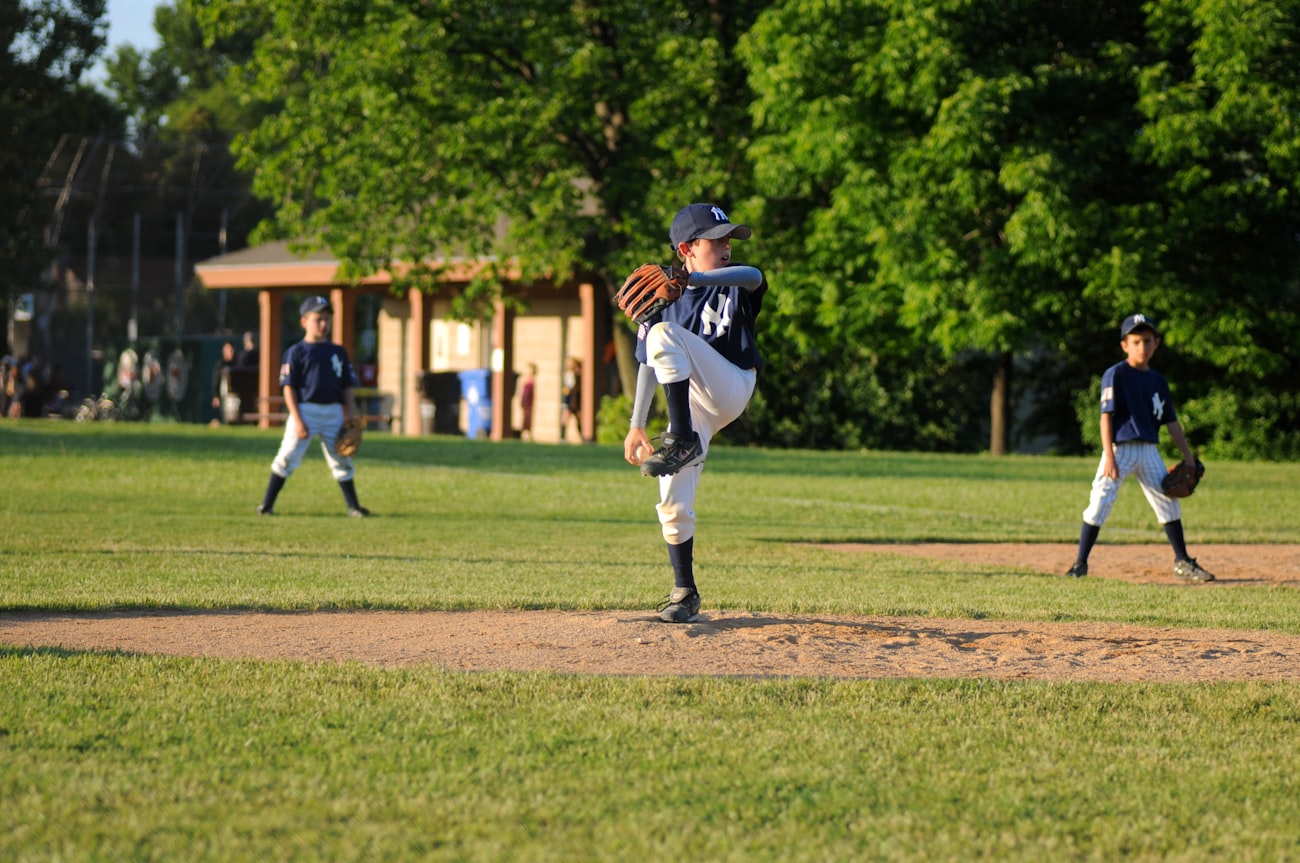
Pitching mechanics are individual, and attempting to force every pitcher into an identical delivery does more harm than good. A handful of principles do apply broadly.
- Balance over the rubber — controlled, repeatable start.
- Direction to the plate — the front foot lands on line, not across the body.
- Hip-shoulder separation — hips rotate before the shoulders.
- Front side firm — the glove side stabilises rather than flying open.
- Finish over the front leg — deceleration matters as much as acceleration.
The last point is the most neglected. Much of the stress on a young arm occurs during deceleration, and a pitcher who does not finish properly is absorbing that load through the shoulder.
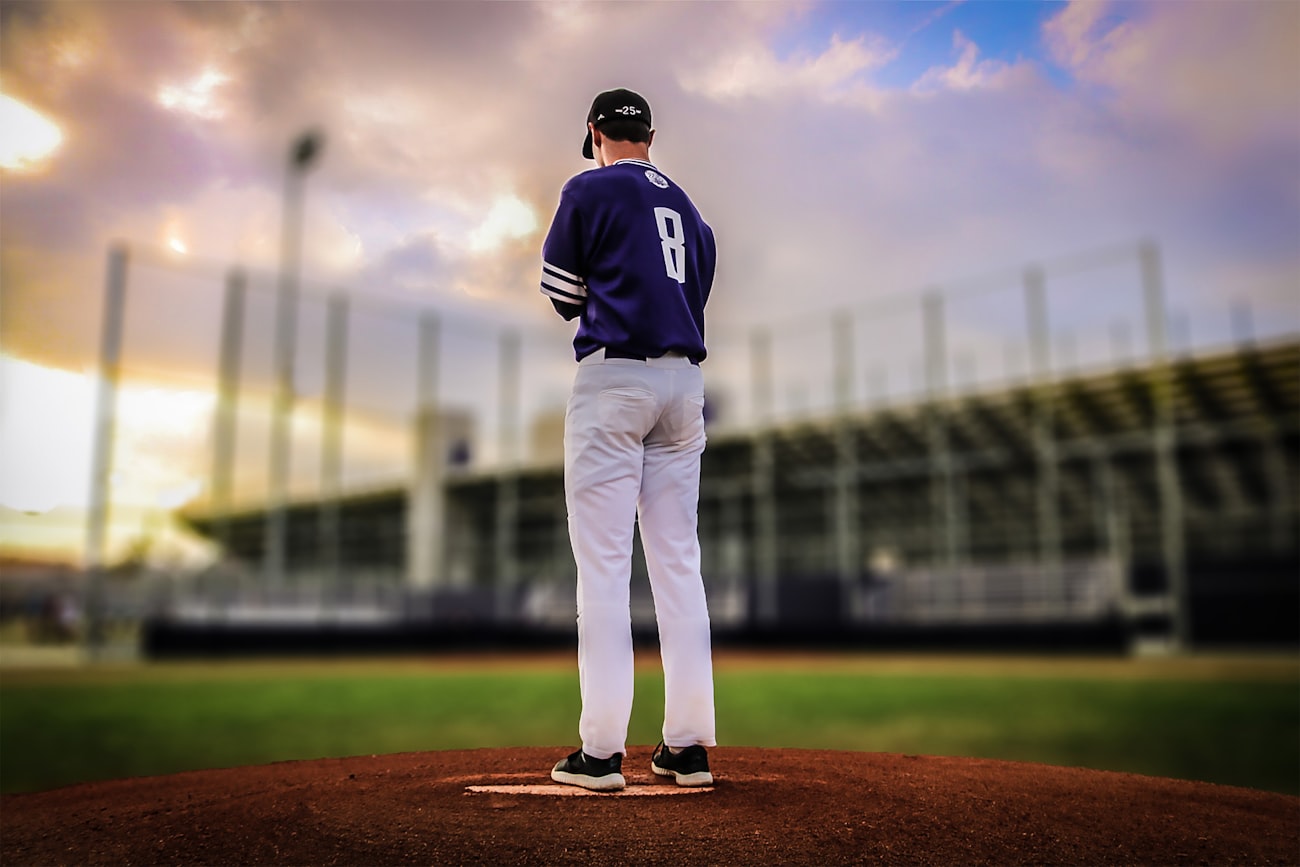
What a Sensible Pitching Week Looks Like
| Day | Activity |
|---|---|
| Game day | Outing within pitch limits for age |
| Day +1 | No throwing; light lower-body movement |
| Day +2 | Light catch play, mobility work |
| Day +3 | Long toss, moderate |
| Day +4 | Short bullpen — command focus, low volume |
| Day +5 | Light catch, strength work |
| Day +6 | Rest or light activity |
Rest days are training days. A pitcher who throws a bullpen the day after an outing is accumulating fatigue, not building skill.
Note also how little maximum-effort throwing appears in that week. Most of a pitcher’s throwing should be sub-maximal — catch play, long toss, command-focused bullpens. Saving genuine max effort for games is how arms last.
Track everything across every team. A pitcher on both a travel team and a school team can easily double their real workload without either coach noticing — one of the clearest risks in travel baseball.
The Long View
The pitchers who succeed at higher levels are rarely the ones who dominated at twelve. They are the ones who arrive at sixteen healthy, strong, able to command two or three pitches, and still wanting to compete.
That means resisting the pressure to specialise early — see our guide on sport specialization — and treating arm health as the foundation everything else is built on.
Our coaching staff includes a pitcher who threw 225 professional games with a 2.50 career ERA and was a First Team All-American at Florida State. If your player wants genuine pitching instruction, come to a tryout.
Frequently Asked Questions
What should a young pitcher’s second pitch be?
A changeup. It is the safest off-speed pitch at any age, it is thrown with the same arm action as a fastball, and developing a quality changeup early is one of the stronger predictors of long-term pitching success.
At what age can a pitcher throw a curveball?
Most guidance points to 13 or 14 at the earliest, once a pitcher has adequate forearm and wrist strength and consistent mechanics — and even then with managed volume. Sliders are generally not recommended before 14.
Do curveballs hurt young arms?
The evidence points more strongly at volume and fatigue than at pitch type. That said, breaking balls thrown with poor mechanics by a tired pitcher are a genuine risk, and most young pitchers do not need one to succeed.
How do you increase pitching velocity safely?
Lower-body and core strength, a structured long-toss progression, and mechanical efficiency. Simply throwing harder more often is the least effective and most dangerous route to velocity.
What matters more, velocity or command?
Command, until roughly high school. A pitcher who can locate a fastball to both sides of the plate and throw a changeup for a strike will out-perform a harder thrower who cannot. Velocity tends to arrive with physical maturity.
Pitch for WAR Baseball
Our staff includes former professional pitchers who manage young arms properly. See upcoming tryouts for 13U through 17U in Tallahassee.