
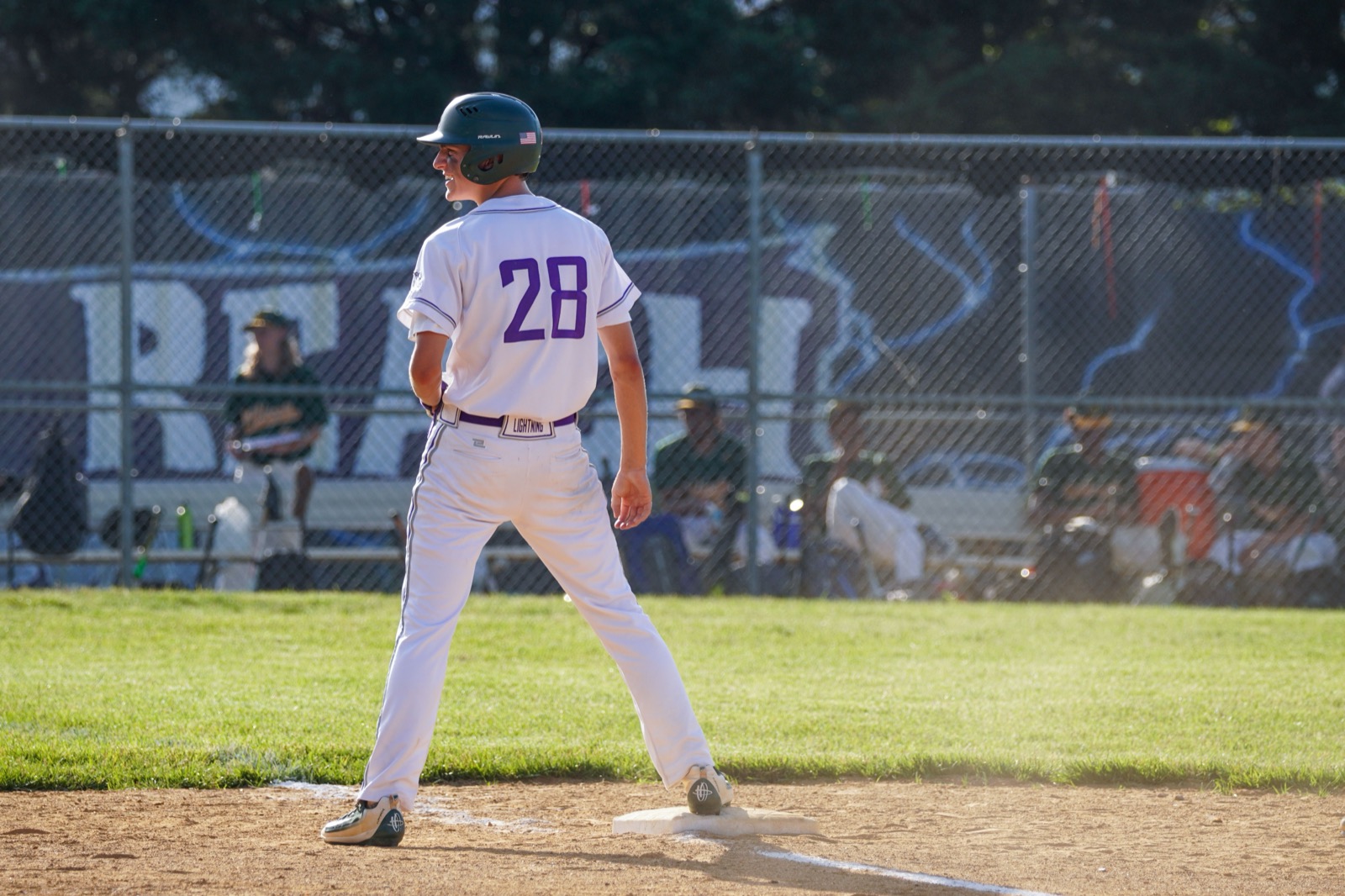
Baserunning is the cheapest advantage available in youth baseball. It requires no equipment, no particular physical gift, and no expensive lessons.
It is also barely coached. Practice time goes to hitting and fielding, showcases measure a 60-yard dash rather than reads, and no youth statistic captures it. Which is precisely why a team that runs the bases well wins games it should not.
Speed Is Not the Same as Baserunning
The most common misconception is that baserunning is a speed skill. It is a decision skill that speed amplifies.
An average runner who reads a ball off the bat correctly, takes a proper secondary lead, and knows when the outfielder’s arm is weak will take more bases than a fast runner reacting late. Reads are learnable; speed largely is not — though our speed training guide covers how much of it can be trained.
Leads
| Base | Typical lead | Priority |
|---|---|---|
| First base | 3 – 3.5 of your own steps | Balanced; able to get back quickly |
| Second base | Slightly larger; watch the shortstop | Nobody is holding you on |
| Third base | In foul territory, moderate | Return in fair territory |
| Any base | Athletic stance, weight centred | Never leaning or crossing the feet |
Two universal errors: leaning toward the next base, which telegraphs intent and costs the return, and crossing the feet, which leaves a runner unable to move in either direction. Shuffle, do not cross.
The Secondary Lead
This is the single most valuable baserunning habit, and the one youth players most consistently lack.
The secondary lead is two shuffle steps toward the next base as the pitch is delivered, timed so the runner is moving as the ball crosses the plate. The point is not to steal — it is to already be in motion when something happens.
- Start the shuffle as the pitcher’s arm passes release, not before.
- Land on the second shuffle as the ball reaches the plate.
- Land in an athletic position, weight balanced, ready to break either way.
- React immediately to a ball in the dirt or a passed ball.
- If the catcher receives it cleanly, return under control.
A runner with a good secondary lead advances on wild pitches that a flat-footed runner watches go by. Across a season that is a meaningful number of bases for zero physical cost.
The runner who is already moving takes the extra base. The one standing still is still deciding.
The whole argument for secondary leads
Reading the Pitcher
Stealing is decided before the pitch, not during it. The runner’s job is to identify the earliest reliable signal that the pitcher is committed to home.
| Read | What to watch | Reliability |
|---|---|---|
| Front leg | First movement toward the plate | High |
| Back shoulder | Rotation toward home | High |
| Heel lift | Back heel raising off the rubber | Moderate to high |
| Hands separating | Break of the glove | Moderate — can be faked |
| Head movement | Looking back at the runner | Low — often deliberate |
| Time to plate | Count the pitcher’s delivery over an inning | Very useful |
Timing a pitcher’s delivery to the plate over the first inning is one of the most practical things a bench can do. A slow delivery makes an average runner a threat; a quick one means even a fast runner needs a perfect jump.
Baserunning value has been studied more rigorously than its coaching profile suggests — the Society for American Baseball Research has published extensively on how much stolen bases, extra bases taken and baserunning decisions actually contribute to run scoring.
Reading pickoff moves is also where balks get spotted — our guide to baseball rules covers what actually constitutes one.
Reads Off the Bat
Most extra bases are taken here, and it is almost entirely a learned skill.
| Situation | Read | Default |
|---|---|---|
| Ball in the air, less than 2 outs | Get back; tag if catchable | Do not get doubled off |
| Ball in the air, 2 outs | Run immediately | Nothing to lose |
| Ground ball behind you | Advance | The fielder’s back is turned |
| Ground ball in front of you | Hold or freeze | Do not run into an out |
| Ball in the dirt | Go on contact with the ground | Secondary lead makes this possible |
| Bloop or gap ball | Read the outfielder’s first step | Their body language tells you |
Coaches at every level notice a runner who reads well. It signals baseball IQ, which is one of the things evaluated at any tryout and something college staff watch for, as our recruiting timeline notes.
The simplest way to build these reads is to make runners call the play out loud in practice — “back”, “go”, “freeze” — before the ball lands. It converts a vague instinct into a decision they are actively rehearsing.
Sliding
Sliding is a safety skill before it is a baserunning one, and it is worth teaching properly rather than letting players work it out mid-game.
- Commit early — the injuries happen when a runner changes their mind halfway.
- Feet-first is the default; head-first carries real hand and shoulder risk.
- Never slide into first base — it is slower and increases injury risk.
- Practise on grass or a slide mat before doing it on dirt at speed.
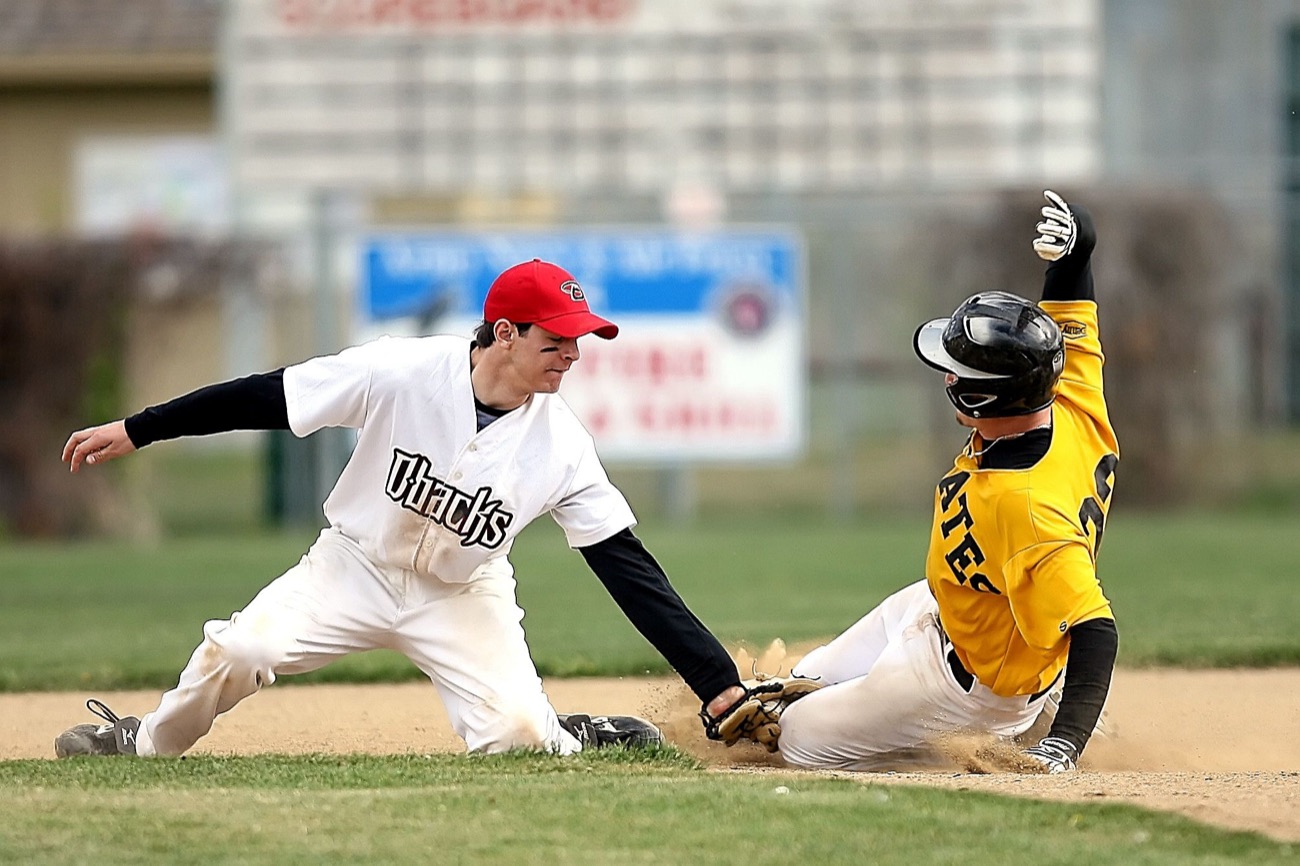
- Hands up, not down, to keep fingers away from the bag.
Where to Start
Three habits produce most of the available gain: a proper secondary lead on every pitch, reading the pitcher rather than the catcher, and never getting doubled off on a ball in the air.
None of them require speed, equipment or lessons. They require a coach who thinks baserunning is worth practice time — which, in a sport where most practice goes to hitting, is a genuine differentiator.
We coach it deliberately at every age group. If you want to see how our teams play, our tournament schedule lists upcoming events, and tryouts are open for 13U through 17U.
Frequently Asked Questions
What is a secondary lead in baseball?
The two shuffle steps a runner takes toward the next base as the pitch is delivered, timed so the runner is moving as the ball crosses the plate. It puts the runner in position to advance on a passed ball or a ball in the dirt without starting from a standstill.
When should a runner start their steal?
On the pitcher’s commitment to home, not on the catcher’s glove. Reading the pitcher’s front leg or shoulder gives the runner the earliest reliable signal that they cannot be picked off.
How big should a lead off first base be?
Typically three to three and a half of the runner’s own steps — far enough to shorten the trip, close enough to get back. The right distance depends on the pitcher’s move and the runner’s speed, so it is worth testing early in a game.
Why is baserunning so undercoached?
It produces no visible statistics at youth level, it is not what showcases measure, and practice time goes to hitting and fielding. That is exactly why it is one of the cheapest places for a team to gain an advantage.
Does speed matter more than instincts on the bases?
Instincts and reads matter more. Average runners with good reads consistently take more bases than fast runners who react late. Reading the ball off the bat and the pitcher’s move are learnable skills.
Play Smarter Baseball
WAR Baseball coaches the parts of the game most programs skip. See upcoming tryouts in Tallahassee for 13U through 17U.