
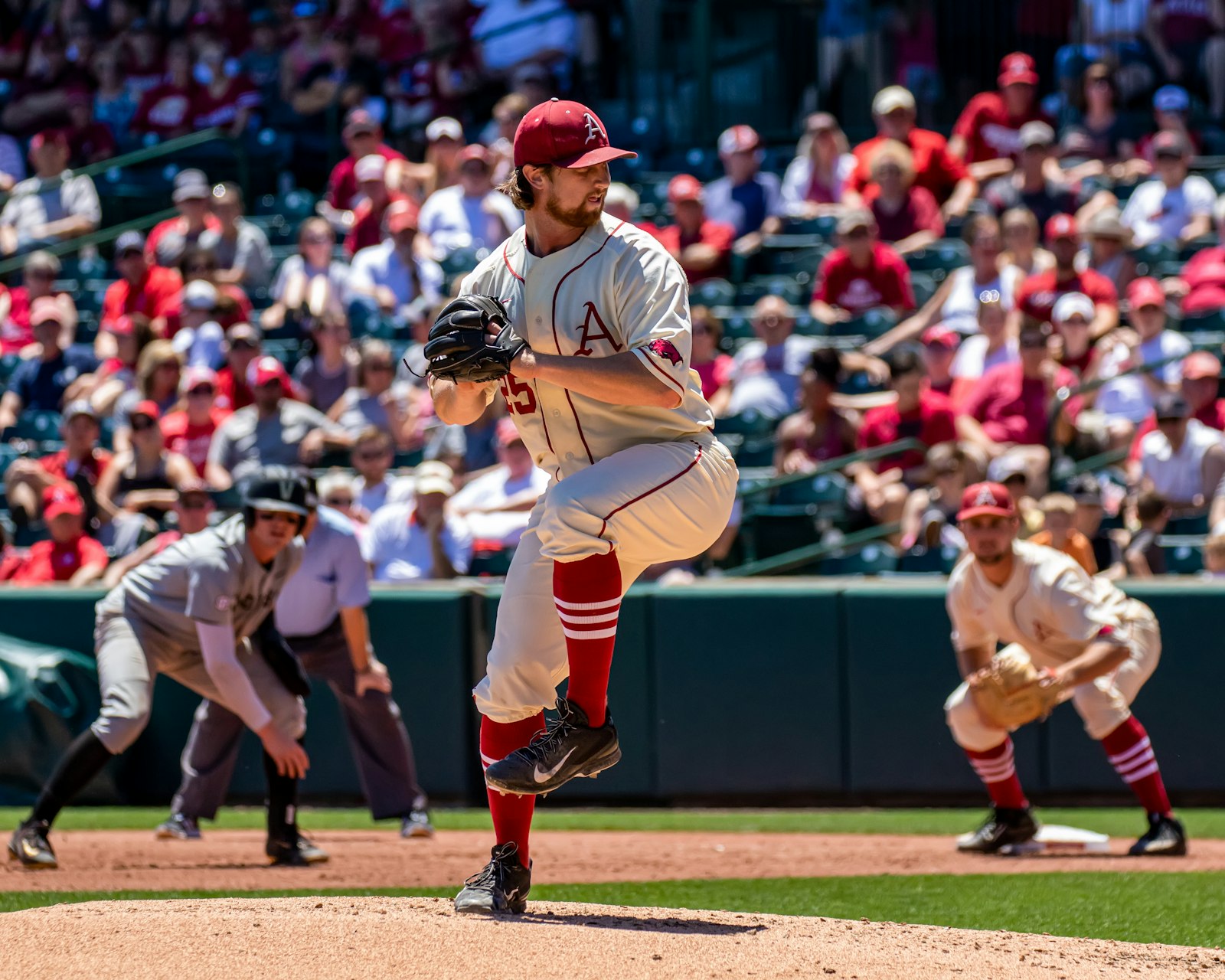
Bunting has quietly disappeared from youth baseball. Launch angle got fashionable, practice time went to exit velocity, and a generation of players reached high school unable to lay one down.
That is an opportunity. Defences rarely practise fielding bunts, and high school coaches still ask for the skill on demand — which makes it one of the cheapest ways to become useful.
The Grip
Almost every bunting problem at youth level traces back to the hands.
- Slide the top hand up the bat to just above the label.
- Pinch the bat between the thumb and the side of the index finger.
- Keep all fingers behind the bat, never wrapped around the front.
- The bottom hand stays near the knob and controls the angle.
- Grip loosely — a tight grip sends the ball too hard.
The fingers-behind-the-bat point is a safety issue as much as a technique one. A bunted ball that catches an exposed finger breaks it, and it is the single most common bunting injury in youth baseball.
Soft hands, fingers behind the bat, and let the ball come to you. Bunting is catching with a bat, not hitting softly.
WAR Baseball coaching staff
Bat Angle
Keep the barrel slightly above the hands. That angle does two useful things at once.
| What the angle does | Why it matters |
|---|---|
| Sends mishits down and foul | Keeps the ball off the catcher and out of the air |
| Encourages contact on the top half | Drives the ball into the ground |
| Keeps the barrel in the hitting zone longer | More margin for error on location |
| Prevents pop-ups | A level or dropped barrel is the main cause of bunt pop-ups |

Use the Legs, Not the Barrel
This is the correction that fixes most young bunters, and it is simple: bend the knees to reach a low pitch.
Dropping the barrel to a low pitch changes the bat angle, points the barrel down, and produces either a pop-up or a missed bunt. The bat angle should stay constant while the whole body moves up and down.
The corollary is that a pitch above the hands should simply be taken. If a bunter has to raise the barrel above their eyes, it is a ball — let it go.
Sacrifice vs Drag
| Sacrifice bunt | Drag bunt | |
|---|---|---|
| Goal | Advance the runner | Reach base safely |
| When to show it | Early — as the delivery starts | As late as possible |
| Stance | Square around fully | Stay closed; pivot late |
| Direction | Down either line, away from the pitcher | Usually toward the weaker side |
| Who uses it | Anyone — expected of every player | Faster players, usually left-handed |
| Difficulty | Moderate | Hard — timing is unforgiving |
Surprise does not matter on a sacrifice, which is why showing early is fine — the defence knows and it still works. On a drag bunt, surprise is the entire point.

Placement
Where the ball goes matters more than how hard it is bunted. The target is the space between the charging fielder and the base.
| Situation | Where to place it |
|---|---|
| Runner on first | Toward first base — pulls the first baseman off the bag |
| Runner on second | Toward third — pulls the third baseman off the base |
| Drag bunt, right-handed hitter | Toward third, hard corner side |
| Drag bunt, left-handed hitter | Toward first, using the head start |
| Any bunt | Away from the pitcher — never straight back |
A useful practice setup: place cones roughly 10 and 20 feet down each line on a youth field (15 and 30 on a full-size field) and require the ball to stop between them. It turns a vague skill into a measurable one.
Youth baseball organisations such as Cal Ripken Baseball have long emphasised bunting as a core fundamental, and their coaching material treats it as a skill every player should own rather than a specialist option.
Why It Still Matters
- High school coaches expect it. Being able to sacrifice on demand stands out at a tryout, as our high school transition guide notes.
- Defences do not practise it. Bunts create errors at youth level.
- It pressures pitchers — fielding position after release becomes a live problem.
- It teaches bat control, which transfers to two-strike hitting.
- It gives smaller players a weapon while they wait for physical development.
That last point matters more than it sounds. A player going through a growth phase and temporarily struggling at the plate can still contribute by moving runners — see our guide to growth spurts.
Practising It
Bunting is one of the easiest skills to practise, which is part of why neglecting it is so odd.
- Start with dry reps — no ball, just squaring and holding the angle.
- Move to a tee, focusing on contact on the top half.
- Progress to soft toss, then front toss, then live pitching.
- Add cone targets to make placement measurable.
- Practise the drag bunt only once the sacrifice is reliable.
It is also excellent solo work. A ball, a wall or a net, and ten minutes will make a player noticeably better inside a fortnight — see our guide to practising alone.
Defending the Bunt
Worth knowing from the other side, because youth defences handle bunts badly and that is exactly why bunting works.
- Corners charge on the first movement; the pitcher breaks toward the ball.
- Second base covers first; shortstop covers second.
- Call the base loudly — the fielder does not decide, the catcher does.
- Take the sure out unless the lead runner is clearly beaten.
- Practise it. Most teams never do, which is the whole point.
The Bottom Line
Bunting will not make anyone a prospect. It will make a player useful, and useful players stay in lineups.
For a skill that requires no strength, no equipment and about ten minutes a session, that is close to the best return available in youth baseball — and it pairs naturally with the situational thinking in our baseball IQ guide.
Frequently Asked Questions
How do you hold the bat when bunting?
Slide the top hand up to just above the label, pinching the bat between thumb and the side of the index finger behind the barrel. The bottom hand stays near the knob. Fingers must stay behind the bat, never wrapped around the front.
Should the bat be angled when bunting?
Yes — keep the barrel slightly higher than the hands. That angle sends mishits down and foul rather than straight back at the catcher, and it helps drive the ball into the ground.
How do you adjust for a high or low pitch when bunting?
Bend the knees. Dropping the barrel to reach a low pitch is the most common youth bunting error and usually produces a pop-up. The bat angle should stay constant while the whole body moves.
What is the difference between a sacrifice bunt and a drag bunt?
A sacrifice bunt is shown early — as the pitcher begins the delivery — because surprise does not matter when the goal is simply advancing a runner. A drag bunt is shown as late as possible, because the goal is a base hit.
Is bunting still worth teaching in youth baseball?
Yes. It advances runners, it pressures defences that rarely practise fielding bunts, and high school coaches expect players to be able to do it on demand — which makes it a genuine differentiator at tryouts.
Learn the Whole Game
WAR Baseball coaches fundamentals most programs skip. See upcoming tryouts for 13U through 17U in Tallahassee.