
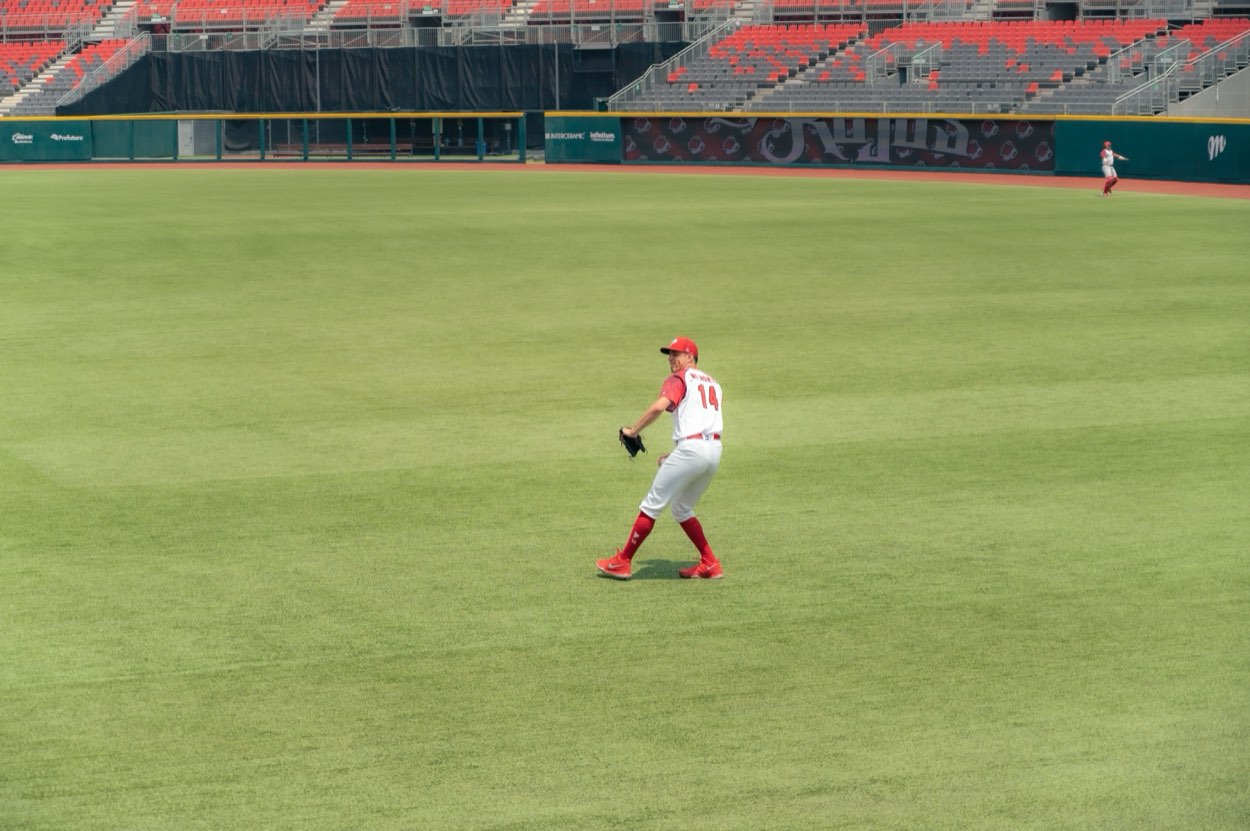
Outfield has a reputation in youth baseball as the place you put players who cannot field. That reputation costs teams games.
Played properly, the outfield is a reads-and-routes position where the first step decides most outcomes — and where a strong, accurate arm changes what the opposition attempts.
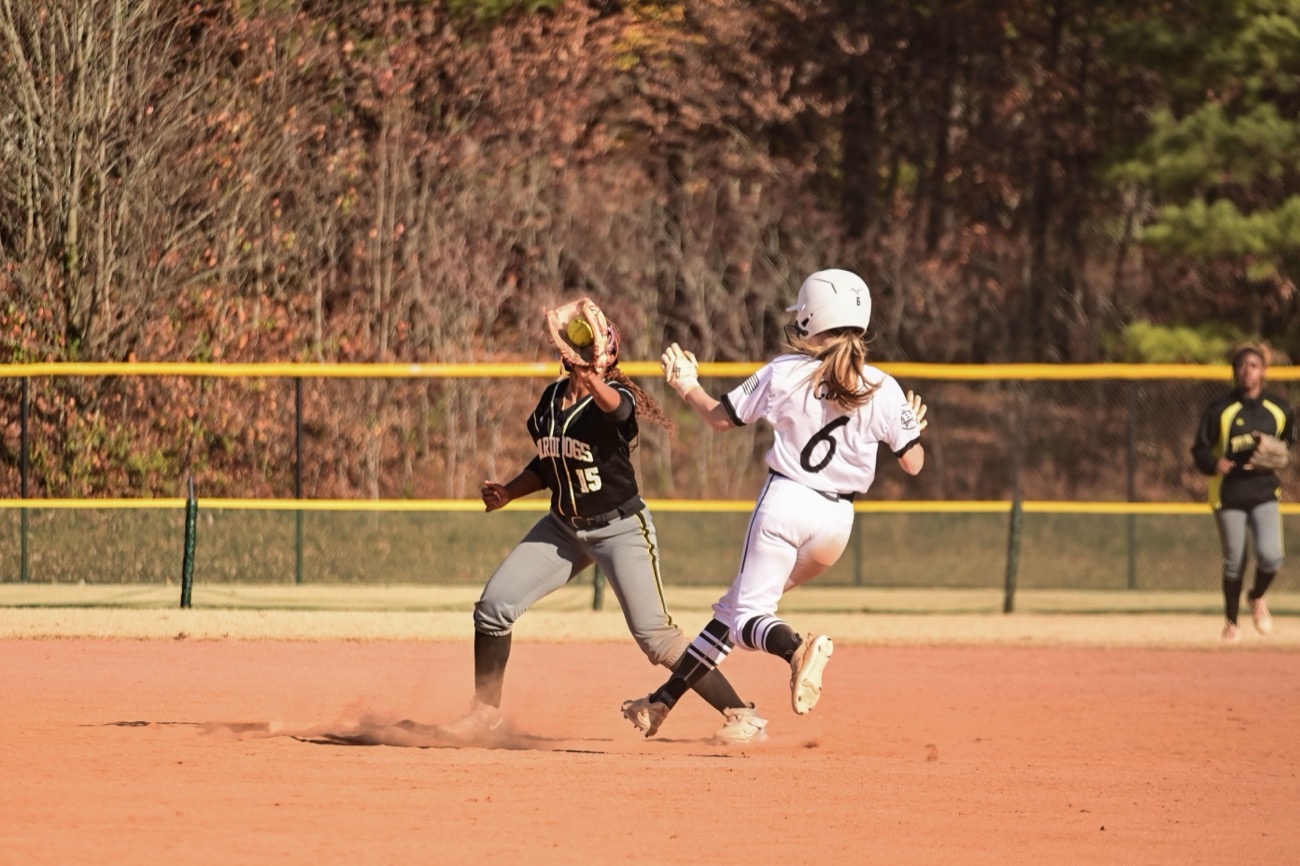
Reading the Ball Off the Bat
This is the skill everything else depends on, and it is learned rather than innate.
Good outfielders are already moving before a poor one has processed contact. They read the hitter’s swing plane, the sound of contact and the initial trajectory, and commit.
| Cue | What it suggests |
|---|---|
| Ball hit high with a loud crack | Deep — turn and go |
| Ball off the end of the bat | Softer contact; likely shorter |
| Steep upward launch | High but often shorter than it looks |
| Line drive directly at you | Hardest read in the outfield — freeze, then react |
| Hitter out in front | Pulled; break toward the pull side early |
| Late swing | Opposite field |
The line drive hit straight at an outfielder is genuinely the hardest ball in the game to judge, because there is no lateral movement to give away distance. The default there is a brief freeze rather than a guess.
The First Step Is Back
If there is one rule worth drilling into a young outfielder, it is this: the first step is back.
A player who breaks back and misreads can come forward and still make the play. A player who breaks in on a ball hit over their head cannot recover. The asymmetry is total.
You can always come in. You can never go back. That single sentence fixes most young outfielders.
WAR Baseball coaching staff
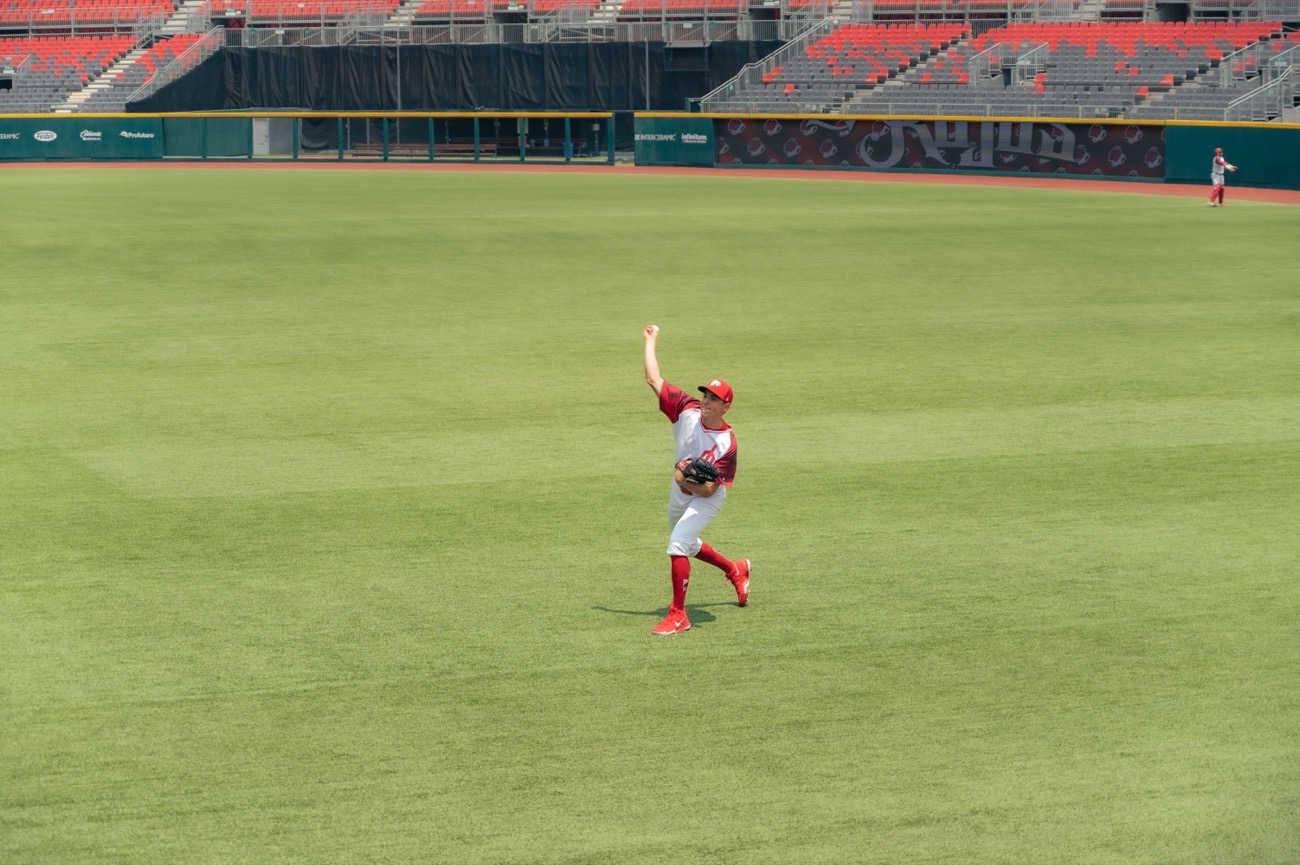
Drop Step, Not Back-Pedal
The second universal correction is how that first step is taken.
| Drop step | Back-pedal | |
|---|---|---|
| Hips | Turn and open | Stay square |
| Speed | Full running speed | Roughly half speed |
| Stability | Balanced | Easy to stumble |
| Changing direction | Straightforward | Difficult |
| Range covered | Substantially more | Limited |
Back-pedalling feels safer because the player keeps the ball in view the whole time. It is slower in every measurable way, and it is why so many young outfielders end up watching balls land just beyond them.
Routes
The goal is the most direct path to where the ball will land — not to where it currently is.
- Break immediately; hesitation costs more than a slightly wrong angle.
- Run on the balls of the feet; the head stays steadier and the ball stops bouncing in vision.
- Take a banana route on balls in the gap, so you arrive moving toward your throw.
- Catch on the throwing-hand side where possible, with momentum toward the infield.
- On a ball you cannot catch, take the angle that cuts it off rather than chasing it.
That last point is undervalued at youth level. Turning a double into a single by taking the correct angle is worth as much as a catch, and it happens far more often.
Vision and Tracking
Tracking a fly ball is a genuine visual skill, and it is trainable. Players who struggle consistently with fly balls sometimes have an uncorrected vision issue rather than a technique problem.
Depth perception, dynamic visual acuity and tracking all contribute. The American Optometric Association publishes guidance on sports vision and on how vision problems present in young athletes — worth considering if a player is otherwise athletic but cannot judge a ball in the air.
Practical adjustments help too: sunglasses for day games, knowing where the sun sits before the inning starts, and using the glove to shield rather than staring into it.
Throwing From the Outfield
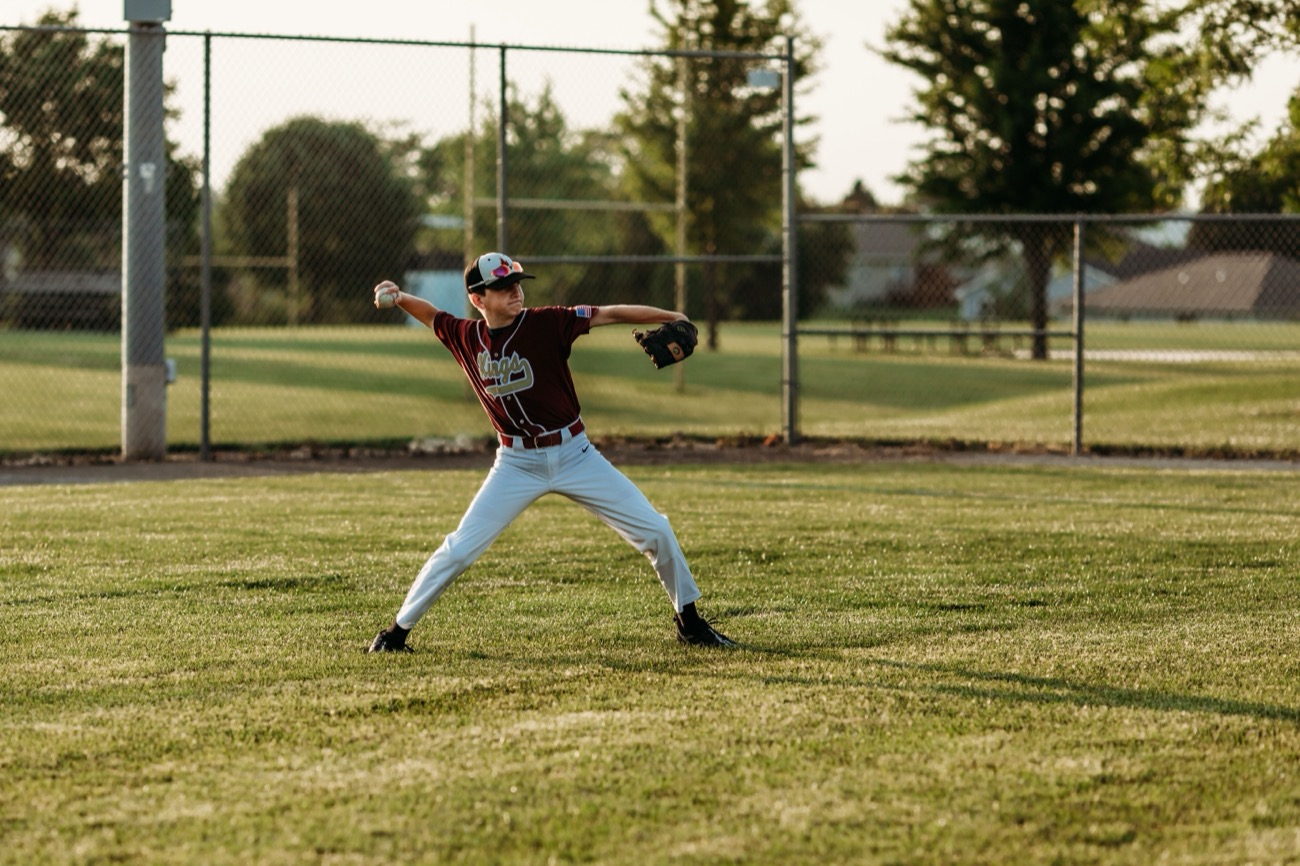
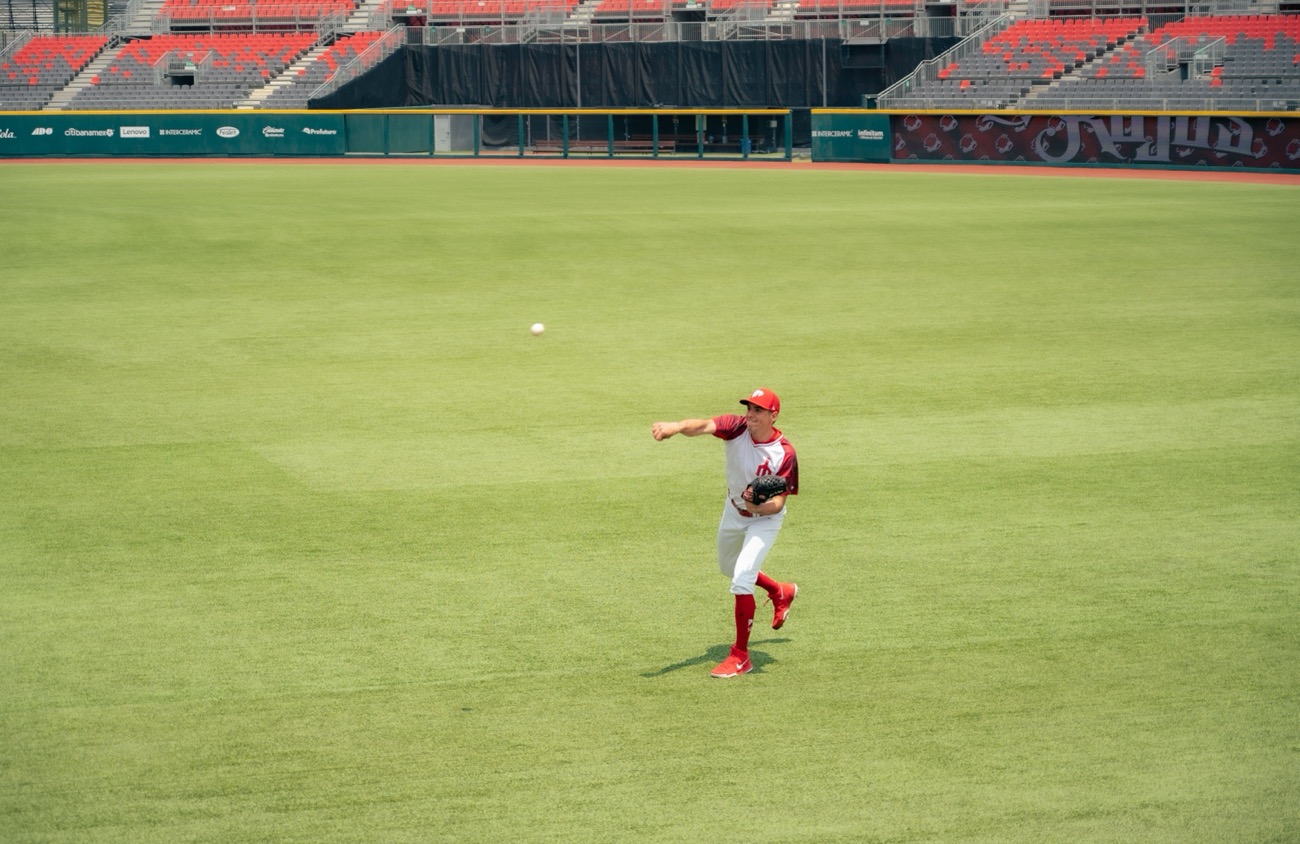
Outfield throwing is where the crow hop earns its place. A player who catches, crow hops and throws generates significantly more distance and velocity than one who catches, plants and throws.
- Move toward the ball so you are already going forward at the catch.
- Catch on the throwing side, above the shoulder where possible.
- Crow hop — a short hop onto the back foot, building momentum toward the target.
- Throw through a cut-off man rather than trying to reach the base on the fly.
- Aim low. A throw that one-hops the cut-off arrives faster than a rainbow.
The cut-off point matters more than arm strength. A hard throw sailing over everyone lets runners advance; a lower throw to the cut-off keeps them honest — the same relay principles covered in our infield defense guide.
Communication and Priority
Outfield collisions are among the more serious injuries in youth baseball, and they are preventable.
| Situation | Priority |
|---|---|
| Outfielder and infielder, shallow ball | Outfielder — they are moving in with better sight |
| Centre field and a corner outfielder | Centre field |
| Two corner outfielders | Whoever calls it first and loudest |
| Any call | Repeat it three times; everyone else peels away |
Practise it at game speed rather than walking through it. Our youth baseball safety guide covers why converging fielders deserve this much attention.
Positioning
Good outfielders move before every pitch. Position should shift with the hitter, the count, the pitcher and the situation.
- Play deeper with two outs and a lead — nothing over your head.
- Shade to the pull side against a hitter who is out in front.
- Move in with a runner on third and fewer than two outs if a throw could matter.
- Know the wind direction and the sun before the inning begins.
- Check the fence distance during warm-ups on an unfamiliar field.
Outfield is also where speed converts most directly into value — a fast outfielder covers genuinely more ground, which is one reason centre field sits in the premium tier of our positions guide. Our speed training guide covers how much of that is trainable.
Frequently Asked Questions
What is the most important skill for an outfielder?
Reading the ball off the bat. Routes, jumps and catches all depend on how quickly and accurately a player reads contact. It is a learnable skill built through repetition, not a natural gift.
Should an outfielder’s first step be back or forward?
Back, almost always. A player can recover coming forward on a misread but cannot recover going backward. The first movement should be a drop step, not a back-pedal.
What is the difference between a drop step and back-pedalling?
A drop step turns the hips and lets the player run properly. Back-pedalling keeps the body square and is far slower, less stable, and makes it hard to change direction. Outfielders should turn and run.
Why do outfielders use a crow hop when throwing?
It converts forward momentum into throwing velocity and aligns the body with the target. A player who catches, crow hops and throws will out-throw one who catches, plants and throws — often by a considerable margin.
How do you practise tracking fly balls?
High volume off a bat where possible, since balls off a machine or thrown by hand behave differently. Start with balls hit directly at the player, then over each shoulder, then into the gaps.
Develop as a Complete Outfielder
WAR Baseball coaches reads, routes and throwing at every age group. See upcoming tryouts for 13U through 17U in Tallahassee.